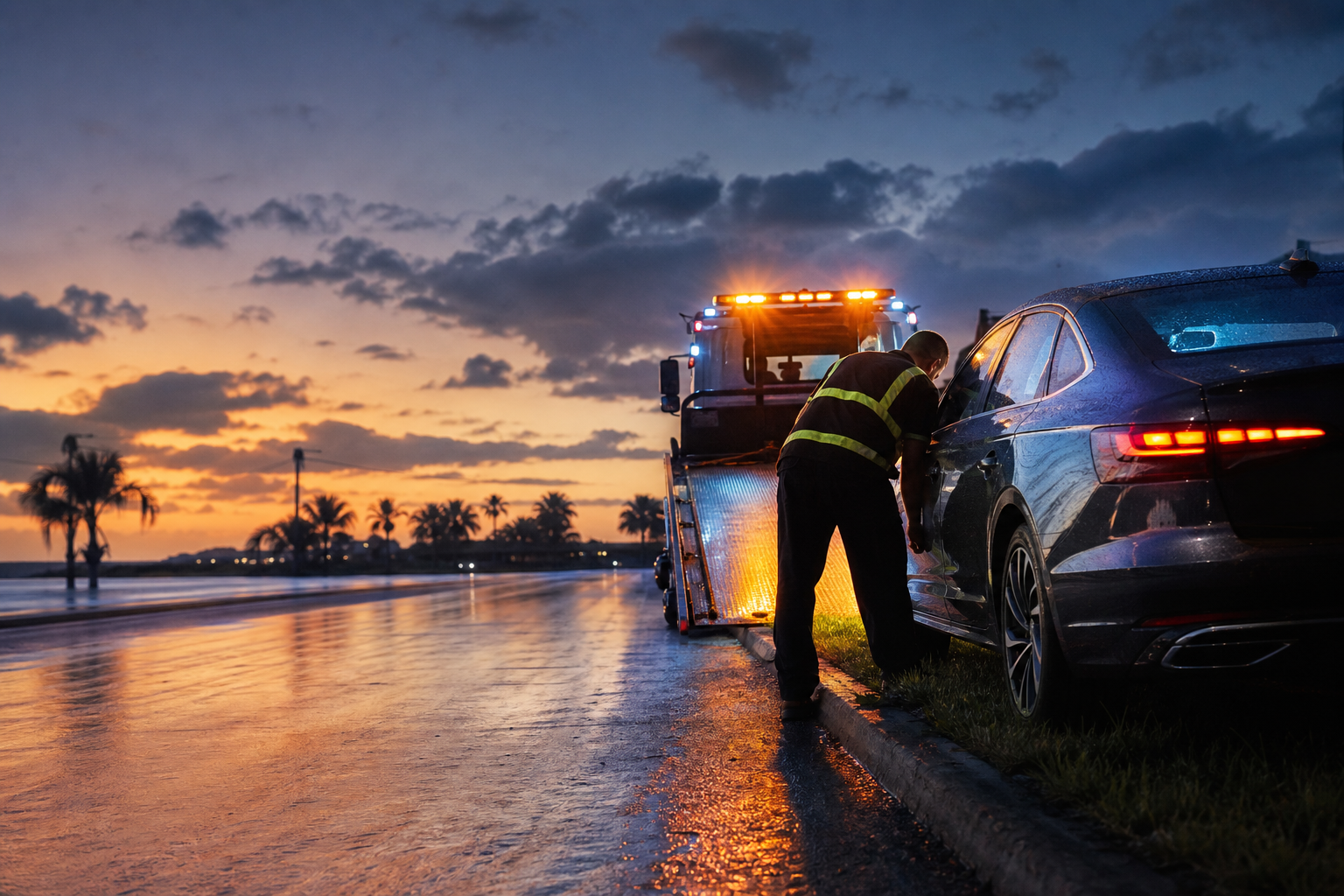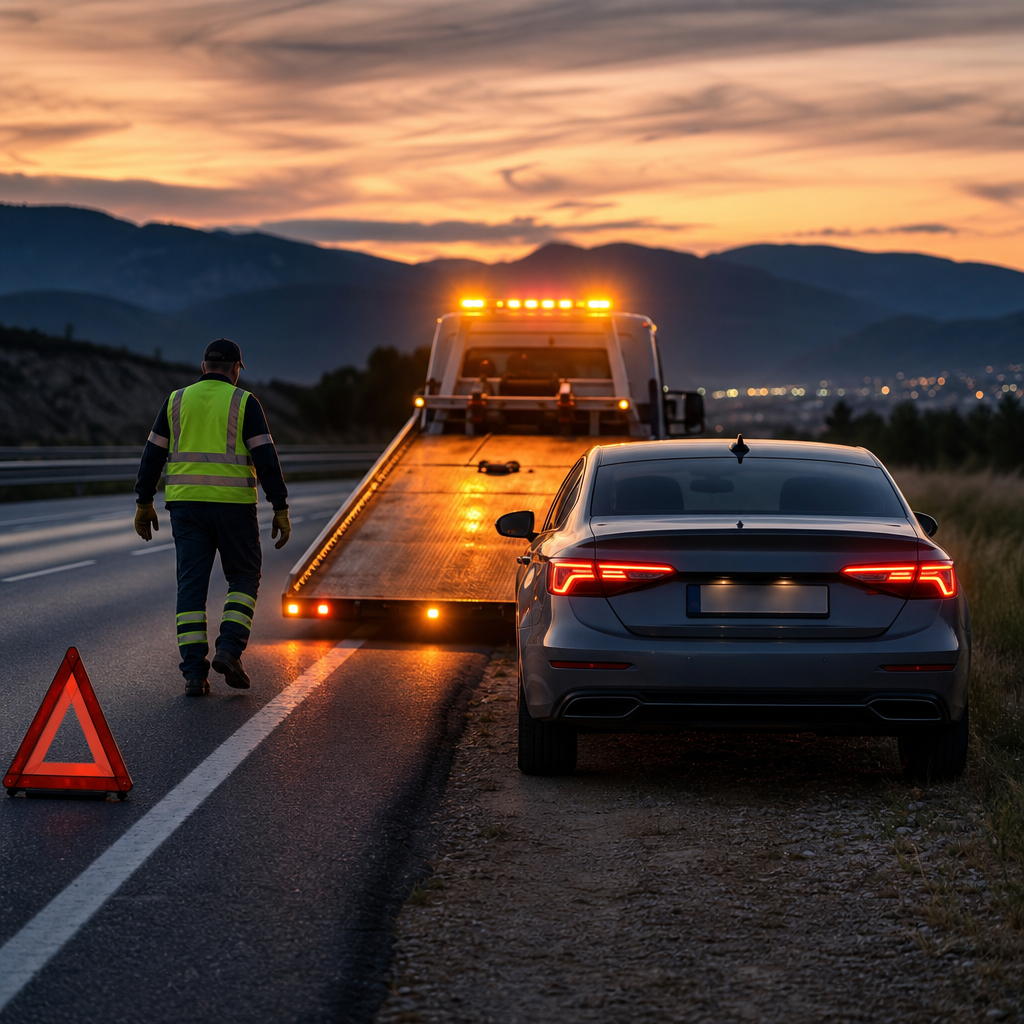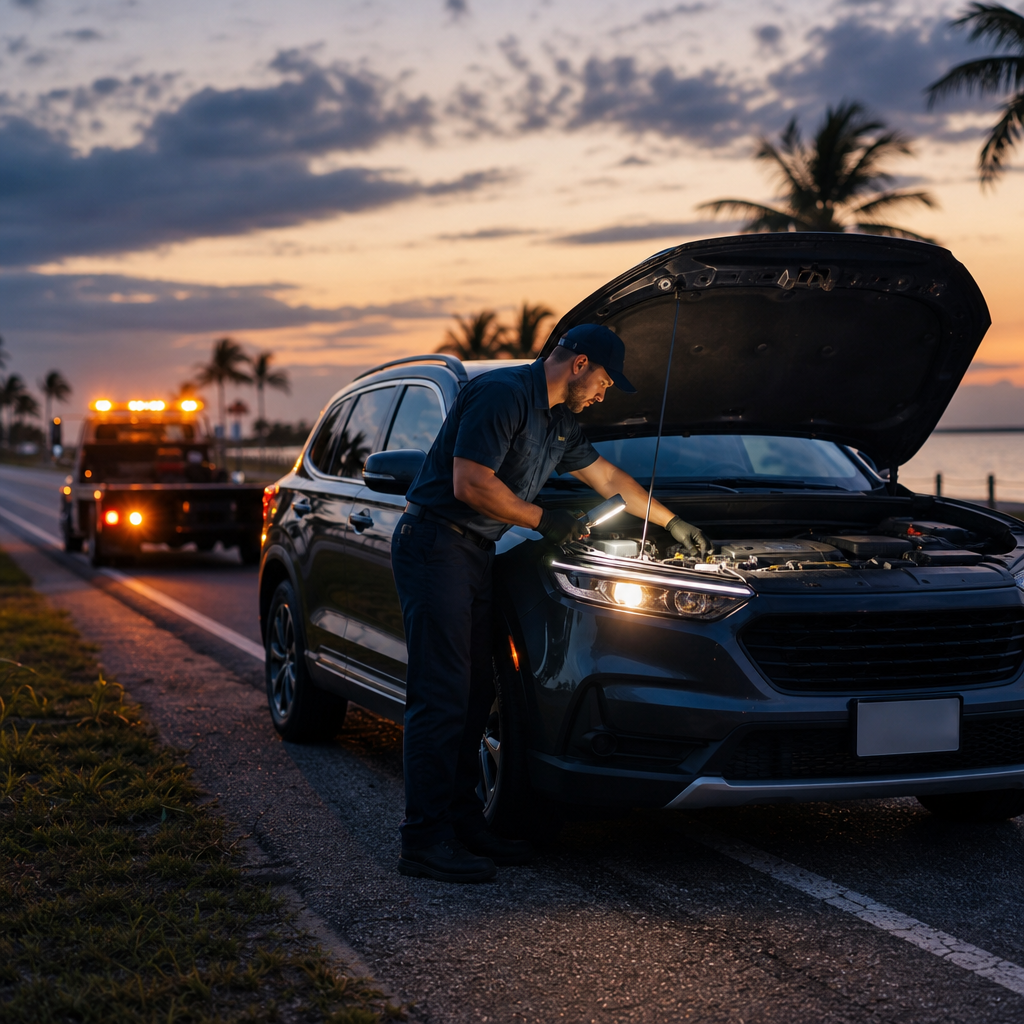
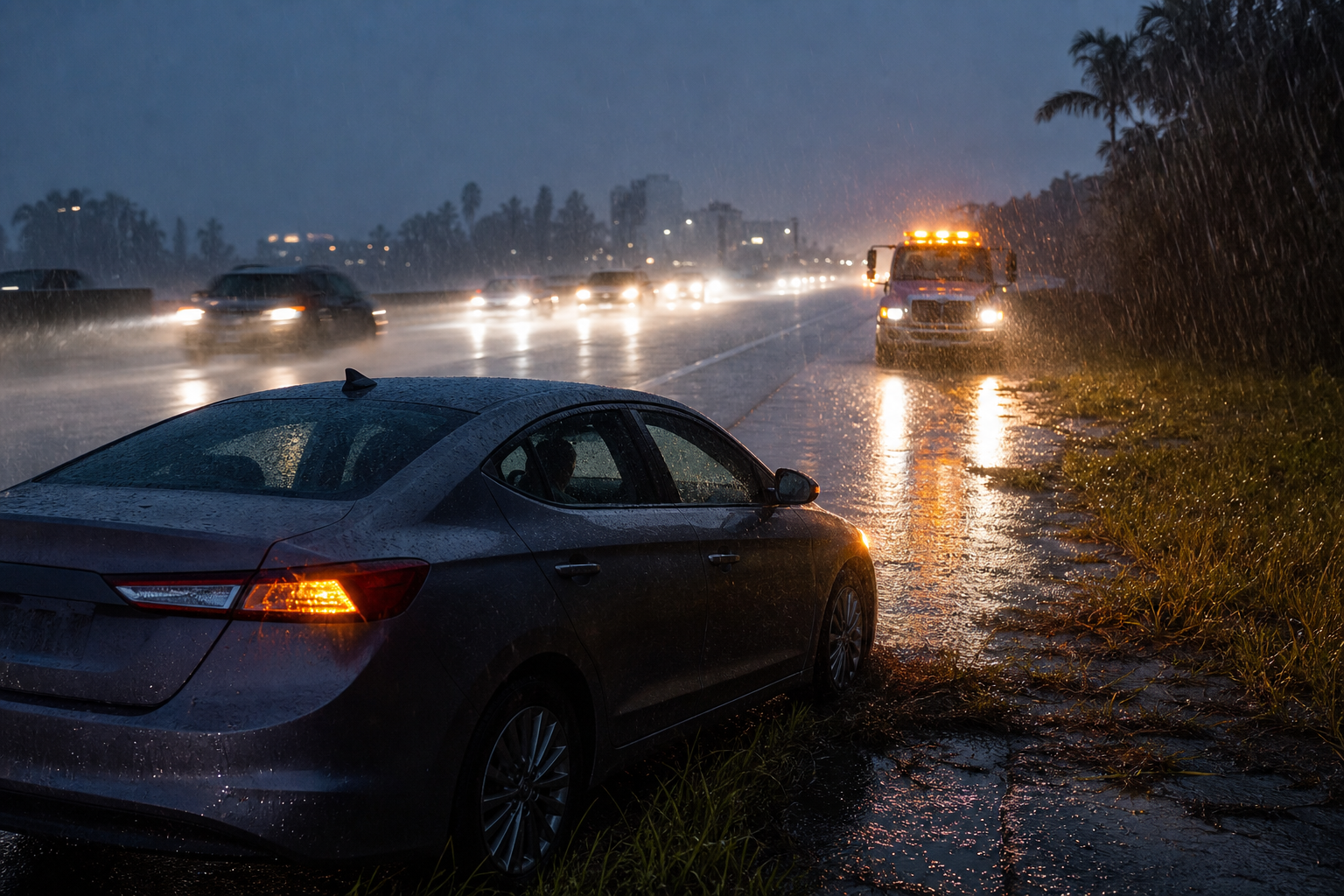
A West Palm Beach downpour can reduce roadside visibility almost instantly. Daylight may darken, tire spray can hide a stopped vehicle, and nighttime headlights can reflect off wet pavement strongly enough to obscure lane markings and shoulders. If your vehicle stalls, the first decision is not how to restart it. It is whether you are exposed to moving traffic or rising water.
Risk signals: decide what kind of emergency you have
Before calling a towing provider, scan for the conditions below. Heavy rain can make an otherwise manageable breakdown far more dangerous because approaching drivers may not see you until they are close.
1. Your vehicle is in a live traffic lane
A stalled vehicle in an active lane faces a serious secondary-collision risk, especially when rain, darkness, or spray limits visibility. Keep your seat belt fastened, activate the hazards, call 911, and state clearly that your vehicle is disabled in moving traffic. Do not make your own plan to cross lanes or exit into traffic. Follow emergency-dispatch instructions about whether to remain inside or how to leave.
2. Water is rising, moving, or entering the cabin
Water reaching the vehicle is not simply a towing update. If the level is increasing, water is flowing around the tires, or water enters the passenger area, call 911 immediately. Follow the dispatcher’s directions, including any instructions to move toward higher ground. Do not wait in worsening water for a tow truck.
3. The vehicle is partly exposed to traffic
Being only halfway onto a shoulder or roadside area leaves the vehicle vulnerable. If it can still roll and you can move farther from traffic without entering water or another hazard, do so carefully. Otherwise, remain belted, report the exact exposure when requesting help, and avoid standing beside the vehicle.
4. Visibility is too poor to judge surrounding traffic
During intense rain, you may hear vehicles before seeing them. Do not step out to inspect a tire, lift the hood, place warning devices, or search beneath the vehicle when traffic is close or visibility is severely reduced. The safest immediate action may be staying belted inside with the hazards on while help is arranged.
Safe actions: follow these steps in order
Step 1: Preserve steering and use remaining momentum
If the engine cuts out but the vehicle is still rolling, keep both hands on the wheel and guide it toward a location completely outside the travel lane. Steering and braking may feel heavier after a stall. Avoid sudden turns or hard braking on wet pavement. Do not coast into standing water simply because it appears farther from traffic.
Step 2: Make the vehicle visible
Switch on the hazard lights immediately. Keep the exterior lights on if they improve visibility, particularly after dark. Do not rely on the vehicle’s color, street lighting, or daylight; rain and road spray can conceal a stopped car in West Palm Beach traffic.
Step 3: Choose the safest place for occupants
If the vehicle is fully off the roadway, away from water, and in a stable location, occupants will often be less exposed while belted inside. If there is smoke, fire, rising water, or another immediate threat, call 911 and follow emergency instructions. Never stand between the disabled vehicle and passing traffic, and do not wait directly in front of or behind it.
Step 4: Call the right type of help
Call 911 first for a live-lane obstruction, rising or entering water, fire, smoke, a crash, injury, or any situation in which you cannot remain safely positioned. For a vehicle that is safely off the roadway but will not run, request emergency towing. If the problem may be a discharged battery or another issue that can be assessed without exposing anyone to traffic, roadside assistance may be appropriate.
Step 5: Give the dispatcher useful location details
Start with West Palm Beach and the direction you were traveling. Then provide the street or route name if known, the nearest visible intersection or address, and a description of your position: fully off the road, partly on a shoulder, in a traffic lane, or near standing water. Share the vehicle’s color, body type, and hazard-light status. If phone mapping gives you a location pin, use it to confirm—not replace—the visible details around you.
Step 6: Explain what happened without diagnosing it
Tell the towing or roadside dispatcher whether the engine stopped while moving, the vehicle lost electrical power, a warning light appeared, water was encountered, or the vehicle will not restart. Mention wheel or steering damage if present. These facts help determine whether standard towing or flatbed towing is the safer recovery method. You do not need to troubleshoot beside the roadway.
Step 7: Wait where you remain visible and protected
Keep your phone available, but conserve its battery and avoid repeated restart attempts. Watch for changes in water level, smoke, traffic exposure, or vehicle position. If conditions become an immediate danger, call 911 rather than waiting for the towing situation to be reassessed.
Avoidable mistakes during heavy rain
- Getting out automatically: A quick inspection is not worth stepping into low-visibility traffic or standing on a narrow roadside area.
- Trying to push the vehicle: Wet pavement, poor visibility, and nearby traffic make roadside pushing especially hazardous.
- Opening the hood near traffic: The raised hood can block your view and places you outside the vehicle. Leave diagnosis to roadside personnel in a safe position.
- Attempting repeated restarts after water exposure: If the vehicle stalled after entering water, stop trying to restart it and report the water exposure to the towing provider.
- Waiting on towing while water rises: Rising or entering water is an emergency-services issue, not a routine roadside delay.
- Standing beside the tow connection area: Remain in the location directed by the towing operator while the vehicle is loaded or secured.
Decision checklist: who should you call?
- Call 911 now: You are stranded in a live lane; water is rising or entering the vehicle; there is smoke, fire, injury, or crash damage; or you cannot stay clear of traffic.
- Call for 24-hour towing: The vehicle is safely out of traffic but cannot be driven or restarted. Request 24-hour towing in West Palm Beach and disclose rain, visibility, and roadside-position concerns.
- Call for roadside assistance: The vehicle is safely parked, conditions around it are stable, and the issue may be handled without working close to moving traffic.
- Request towing rather than roadside service: The stall followed water exposure, the vehicle has wheel or steering damage, or attempting service where it sits would expose the operator to traffic.
- Escalate immediately: A previously safe shoulder begins flooding, the vehicle shifts toward traffic, visibility worsens enough to hide the vehicle, or any occupant develops a medical emergency.
FAQs
Should I stay inside a stalled vehicle during a downpour?
If you are fully off the roadway, away from rising water, and there is no smoke or fire, staying belted inside may reduce your exposure to traffic. If you are stopped in a live lane, call 911 immediately and follow the dispatcher’s instructions about remaining inside or exiting.
Can roadside assistance restart a rain-stalled vehicle?
Possibly, but only if the vehicle is in a safe working location and there is no indication that water entered critical components. Report exactly when the stall occurred and whether you drove through water. Towing may be the safer option.
Should I place reflective triangles behind the vehicle?
Not if doing so requires walking near active traffic or if rain prevents you from seeing approaching vehicles clearly. Hazard lights are the first visibility measure. Do not leave a protected position to place equipment in dangerous conditions.
What if my location is hard to describe?
Provide your city, travel direction, route or street name if known, nearest visible intersection or address, and whether you are in a lane or fully off the roadway. A phone location pin can help the dispatcher confirm those details.
Is a flatbed always required after a stall in heavy rain?
No. The appropriate towing method depends on vehicle condition, water exposure, wheel or steering damage, and the recovery position. Give the dispatcher accurate facts so the towing provider can choose suitable equipment.
Get clear of danger before arranging the tow
If your vehicle has stalled during heavy rain in West Palm Beach, address live traffic, rising water, fire, or injury through 911 first. Once the vehicle and occupants are in a stable position, contact My Florida Towing for towing or roadside assistance and describe your exact roadside exposure. A precise location and an honest account of the conditions help the operator approach without creating another hazard.