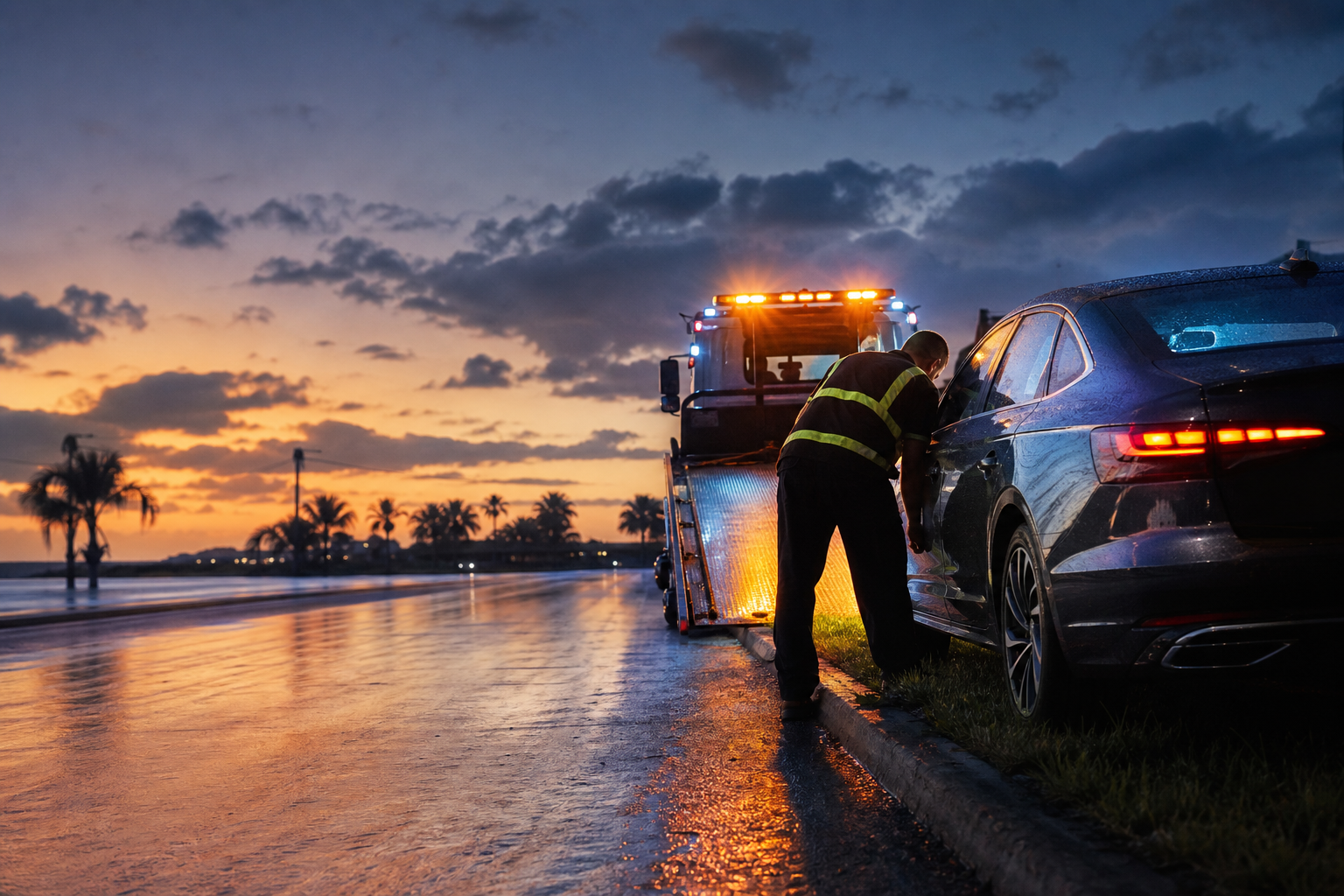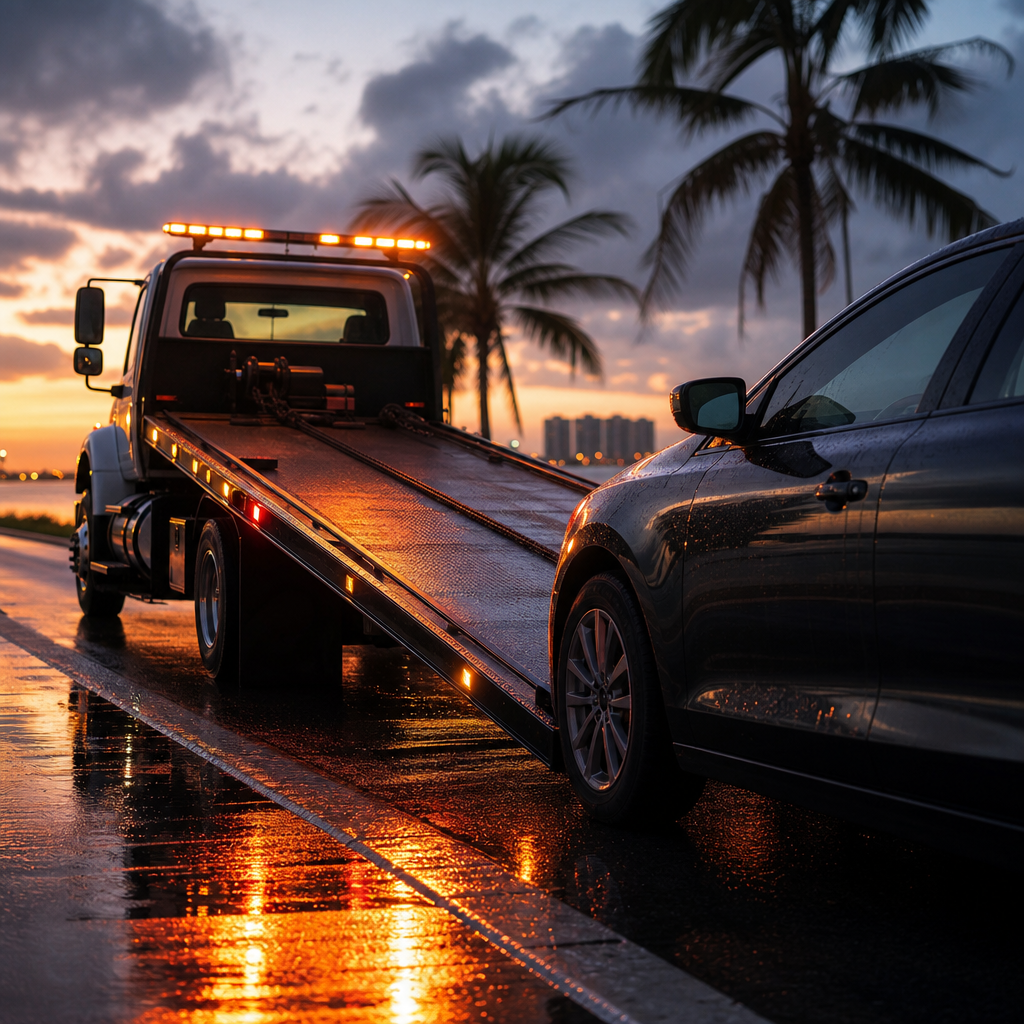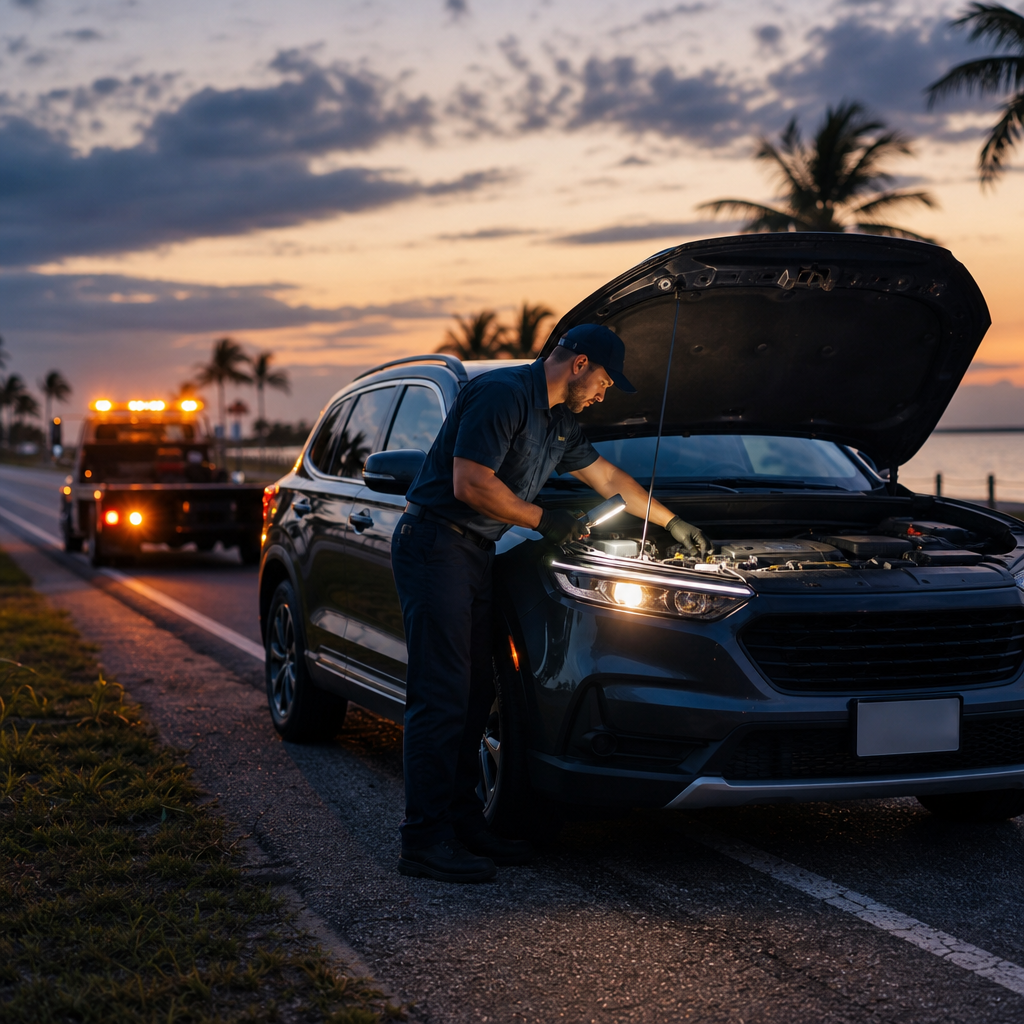
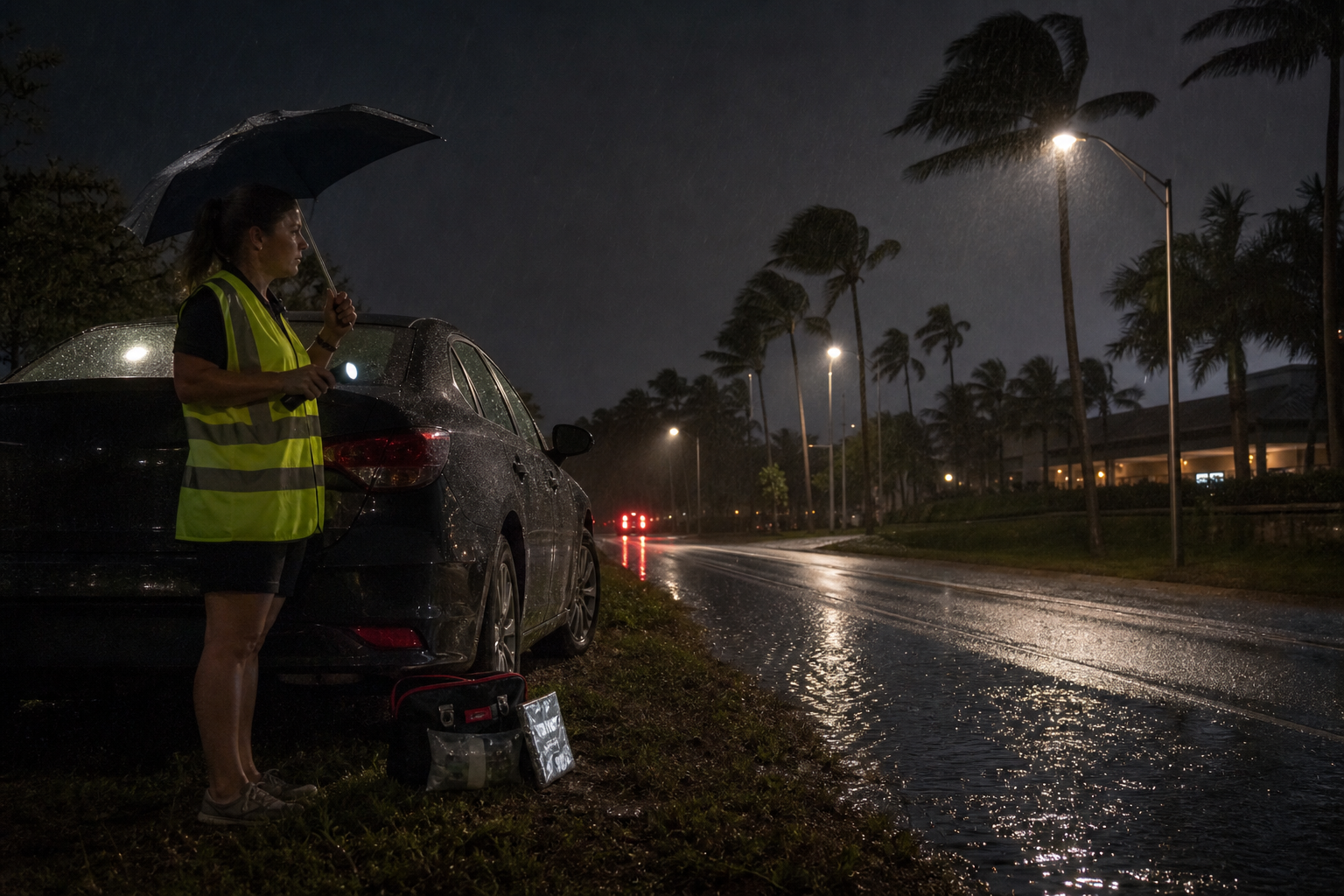
Rain is hitting the windshield hard, visibility is poor, and your vehicle begins to lose power or picks up a warning light. In West Palm Beach, a storm-related roadside problem can become a personal-safety problem quickly after dark—especially where water collects near low-lying roadway edges, traffic is moving around closures, or evacuation travel has made alternate routes crowded.
This is not a checklist for riding out a storm in your driveway. It is a practical do-and-don’t guide for the moment your vehicle cannot safely continue. Keep the right supplies within reach, protect yourself first, and give roadside assistance the details that help them plan a safe approach.
First 10 minutes: protect the person before the vehicle
Do this now if your vehicle is disabled in storm conditions:
- Move out of moving traffic only if you can do so without entering standing or flowing water.
- Turn on hazard lights. Use interior lights sparingly if the battery may be weak.
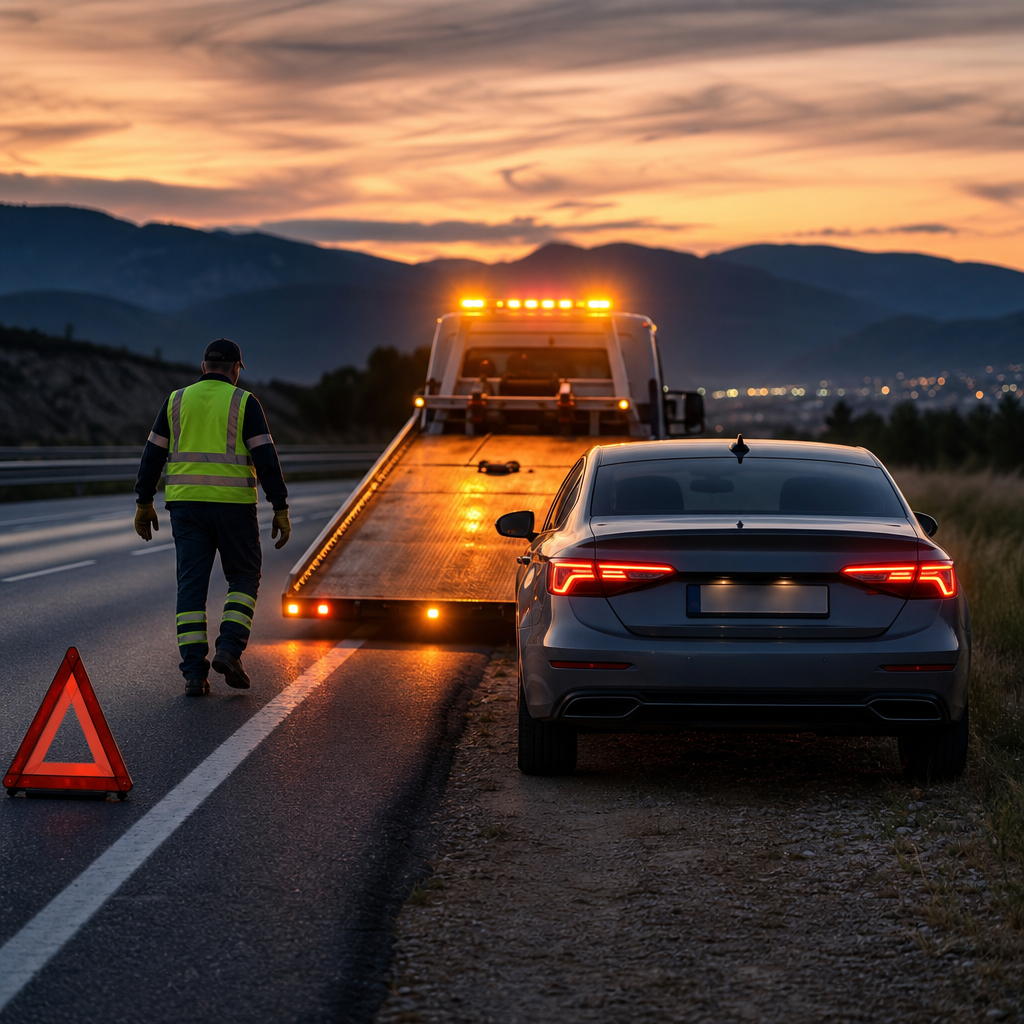
- Put on a reflective vest before stepping outside, if leaving the vehicle is safer than staying inside.
- Call 911 if you are trapped, water is rising rapidly, the vehicle is taking on water, or getting out is unsafe.
- Call for towing or roadside help once you are in a safer position and can communicate your location and conditions.
Do not remain in a vehicle threatened by rising floodwater when a safe exit route exists. Leave the vehicle only if you can reach higher, safer ground without walking into moving water, hidden holes, downed lines, or traffic. If you cannot safely leave, call 911 and focus on making yourself visible to responders.
At night, assume other drivers may not see you until they are close. A flashlight, reflective vest, and charged phone are more useful during a roadside wait than a large collection of items stored under luggage or buried in the trunk.
Build the storm-season kit around roadside visibility and communication
A useful kit is compact, reachable, and protected from water. Store the core items in a sealed pouch or small tote inside the passenger area, not only in the cargo area. During a breakdown, a blocked hatch, traffic exposure, or water around the vehicle may make trunk access impractical.
| Keep in the vehicle | What it helps with | Do | Don’t |
|---|---|---|---|
| Charged power bank and charging cable | Calling for help, sharing location, receiving updates | Check the charge before storm forecasts and long trips. | Assume a low vehicle battery will keep your phone charged. |
| Flashlight with spare batteries | Seeing footing, vehicle damage, and roadside hazards | Keep it within arm’s reach of the driver’s seat. | Use your phone flashlight as your only light source. |
| Reflective vest or reflective outer layer | Nighttime visibility near traffic | Put it on before exiting if you must leave the vehicle. | Stand behind or directly beside the vehicle in an active lane. |
| Rain jacket, poncho, and closed-toe shoes | Staying mobile and less exposed while waiting | Keep dry footwear available for a safe relocation. | Walk through storm runoff in sandals or bare feet. |
| Drinking water and small shelf-stable snacks | Waiting during extended storm traffic or closures | Rotate supplies periodically. | Rely on nearby businesses being open during severe weather. |
| Paper with key contacts and vehicle details | Reporting information if the phone is damaged or nearly dead | Include your emergency contact, plate number, and roadside provider. | Store sensitive documents loose and visible in the cabin. |
Add any medication, child-care items, mobility needs, or pet supplies that your household cannot safely go without during a roadside wait. Keep these items personal and practical; the goal is to get through a disruption safely while help is arranged.
Decision points: stop, relocate, or request help
1. Water is on the road ahead
Do: Turn around or wait in a safe location before entering water of unknown depth. Stormwater can hide debris, damaged pavement, and drop-offs. In Palm Beach County, low-lying roadway areas can flood even when the route looked passable earlier.
Don’t: Follow another vehicle into water just because it appears to get through. Its height, path, and condition may be different from yours.
2. Your vehicle stalled after water exposure
Do: Stop trying to restart it. Report that the vehicle was exposed to water, whether water entered the cabin, and whether the vehicle is now in a safe accessible spot.
Don’t: Continue cranking the engine or attempt to drive it farther. Request help through emergency towing assistance and let the provider determine the safest towing approach from the vehicle condition and access details.
3. You are stopped because of a closure, bridge restriction, or heavy evacuation traffic
Do: Keep fuel use and phone battery use deliberate. Monitor official instructions available to you, remain alert to changing traffic patterns, and avoid blocking access routes.
Don’t: create a shortcut through shoulders, medians, flooded side streets, private access areas, or blocked routes. A navigation detour is not proof that a road is safe or open.
4. The problem is mechanical but there is no flood danger
Do: Describe the symptom: dead battery, flat tire, locked-out vehicle, overheating warning, wheel damage, or inability to start. For a straightforward issue in a safe location, roadside assistance may be appropriate.
Don’t: attempt roadside work in heavy rain, darkness, or near fast-moving traffic if it puts you in a dangerous position.
What to report when you call for towing or roadside assistance
A dispatcher does not need a perfect description. They need information that affects safety, access, and the equipment plan. Give the clearest details you can:
- Your location, travel direction, nearby safe reference point, and whether you are on a roadway, parking area, driveway, or access lane.
- Whether the vehicle is in traffic, on a shoulder, behind a gate, in a garage, near standing water, or blocked by debris.
- Whether water is rising, whether water entered the cabin, and whether the vehicle stalled after water exposure.
- Your vehicle’s make, model, color, plate number if available, and drivetrain type if you know it.
- Visible wheel, tire, steering, or underbody damage.
- How many people are with you and whether anyone has an urgent safety or medical concern.
Do not try to decide what tow equipment is needed. Report the condition and access constraints; the towing provider can determine the appropriate response. If the vehicle is safely accessible but cannot be driven, request flatbed towing information as part of the conversation when applicable, especially if there is wheel damage, unknown drivability, or water exposure.
What help does next—and how to wait safely
After you call, the provider uses your report to assess the vehicle’s location, access, condition, and the safest way to assist. Storm conditions may change the approach: water, traffic backups, closed routes, narrow access points, and limited visibility can all affect how a tow truck or roadside technician reaches you.
While waiting, keep your phone available, watch for changing water levels, and update the provider if the vehicle has been moved or the access situation changes. If your location becomes unsafe, call 911 rather than waiting for a towing response.
For a vehicle that cannot continue safely, use 24-hour towing service rather than attempting to drive through worsening conditions. The objective is not to save the trip; it is to avoid turning a disabled vehicle into a flood or traffic emergency.
Storm-season questions from stranded drivers
Should I stay in my car during a Florida storm?
Stay inside only when it is safer than exiting. If floodwater is rising, the vehicle is taking on water, or you are trapped, call 911. If a safe route to higher ground exists, do not remain in a vehicle threatened by floodwater.
What is the most useful item to keep within reach?
A charged phone with a power bank is essential, but pair it with a flashlight and reflective vest. At night, the ability to communicate and be seen matters immediately.
What should I tell a towing provider after driving through water?
State that the vehicle was exposed to water, whether it stalled, whether water entered the cabin, whether it has been restarted, and whether it is parked in a safe accessible location. Do not keep trying to start it.
Can roadside assistance help during storm traffic or route closures?
It can help with a disabled vehicle when access is safe, but closures, flooding, and traffic conditions can affect the route to you. Give accurate access details and update the provider if conditions change.
Safety-first next step
Before the next storm forecast, place your visibility gear, phone power, water, and vehicle details where you can reach them without unloading the car. If you are currently stranded in West Palm Beach, Florida, move to safety first, call 911 for immediate flood danger, and contact My Florida Towing for towing or roadside assistance once it is safe to do so.