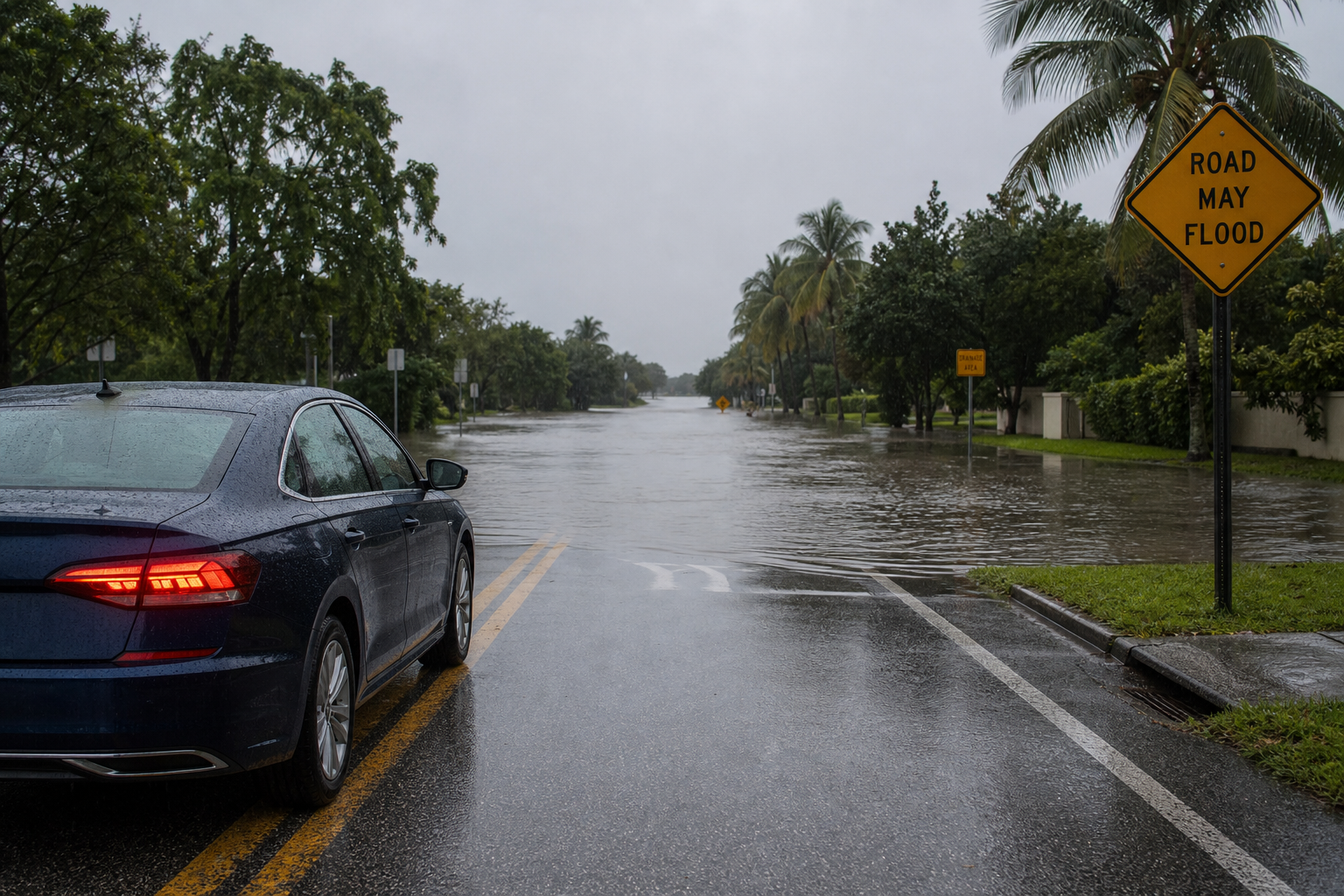
Heavy rain can turn a normal drive into a stressful decision in minutes. In West Palm Beach and across Palm Beach County, intense downpours can overwhelm drainage, cover low spots in the road, and leave drivers unable to tell how deep the water really is. A flooded street may look passable from the driver’s seat, especially when other vehicles are nearby. That appearance can be dangerously misleading.
The safest rule is simple: never drive into flooded water when you cannot clearly see the road surface and judge its condition. Turn around, choose a safer route, or stop in a safe location and wait for conditions to improve. If your vehicle is already stranded, protect yourself first and arrange help rather than trying to force the vehicle through.
Immediate actions if you reach a flooded road
- Do not enter the water. Stop well before the flooded area, where your vehicle remains on dry, stable pavement.
- Turn around safely. Use a nearby driveway, side street, or other safe place to reverse direction. Do not make sudden moves into traffic.
- Choose higher, clearer roads. Avoid routes where water is pooling, flowing across the pavement, or hiding lane markings.
- If your vehicle stalls in water, do not restart it. Exit only if it is safe to do so, move to higher ground, and request help.
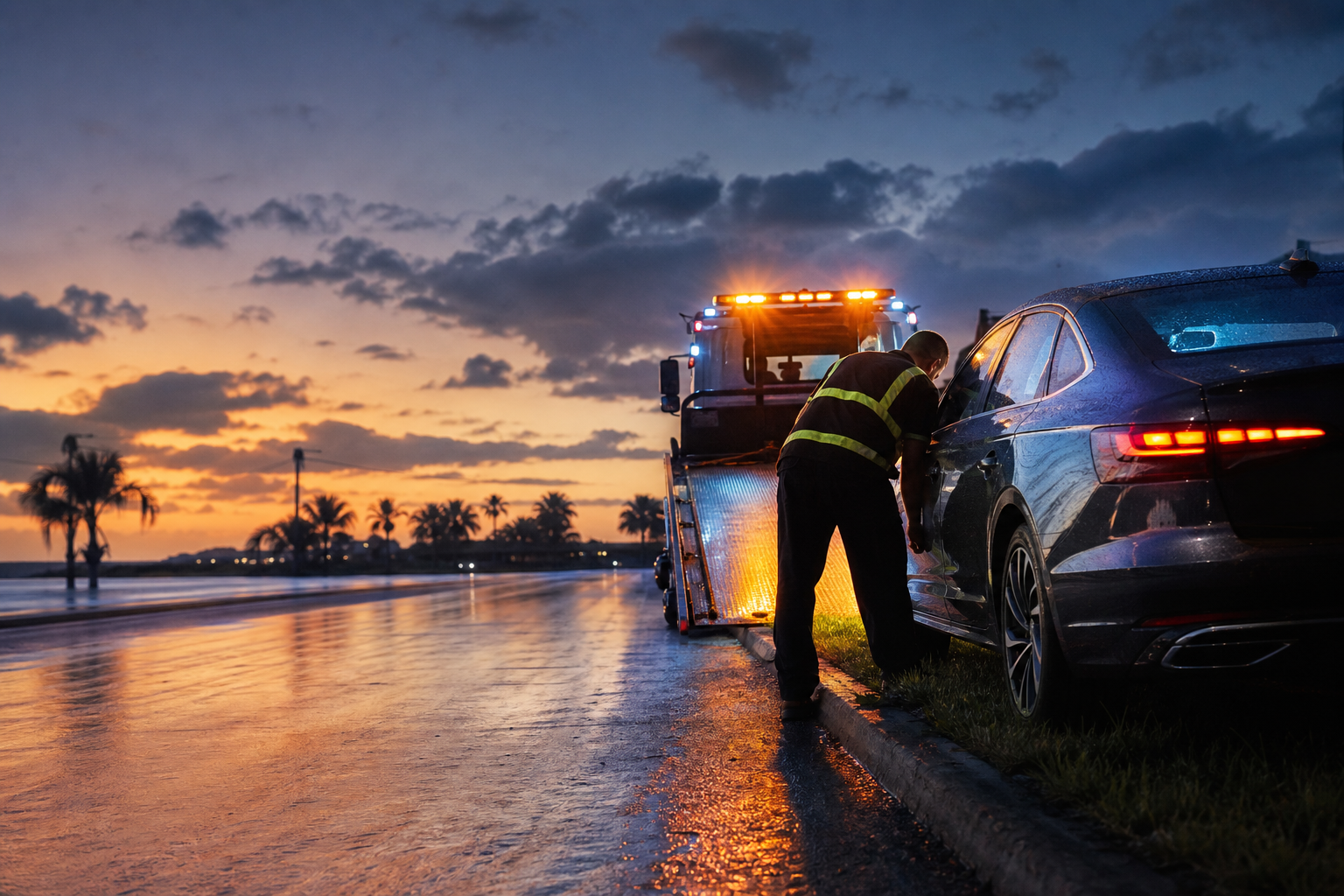
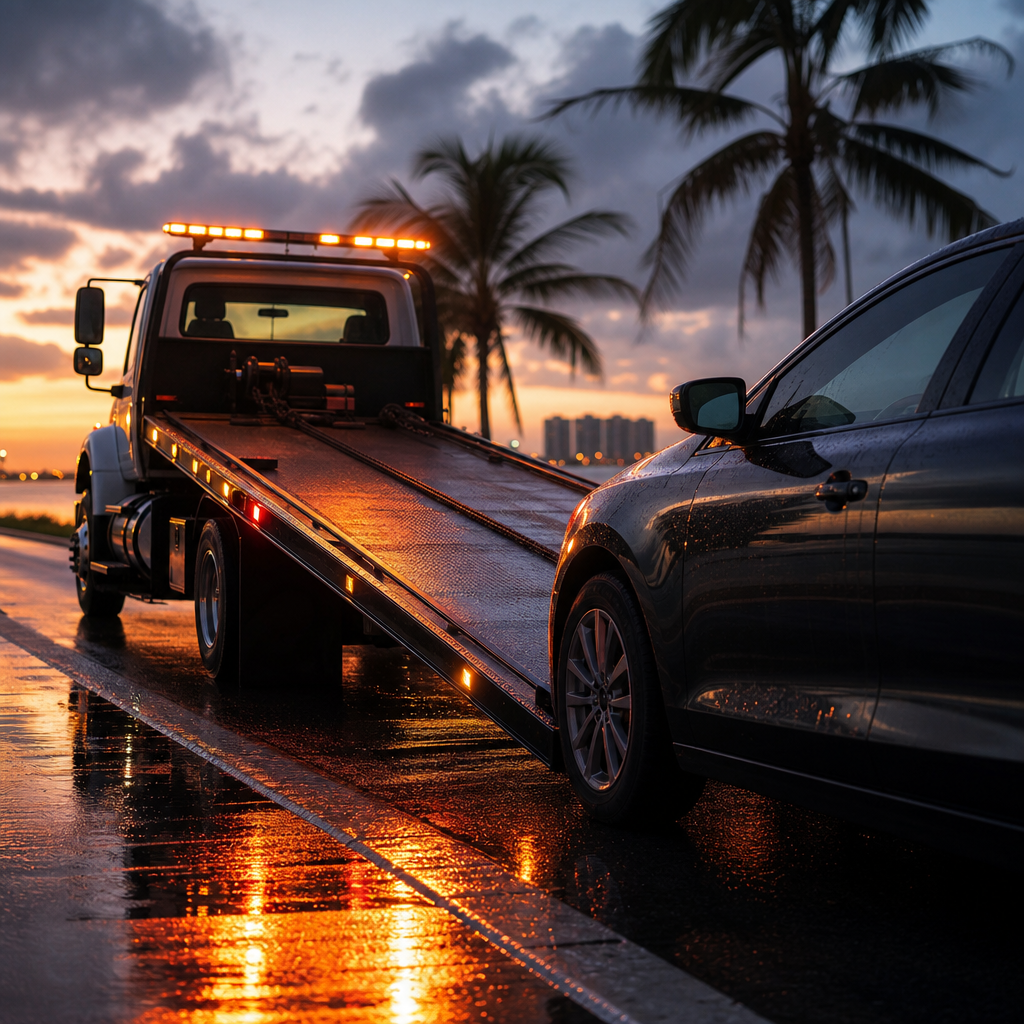
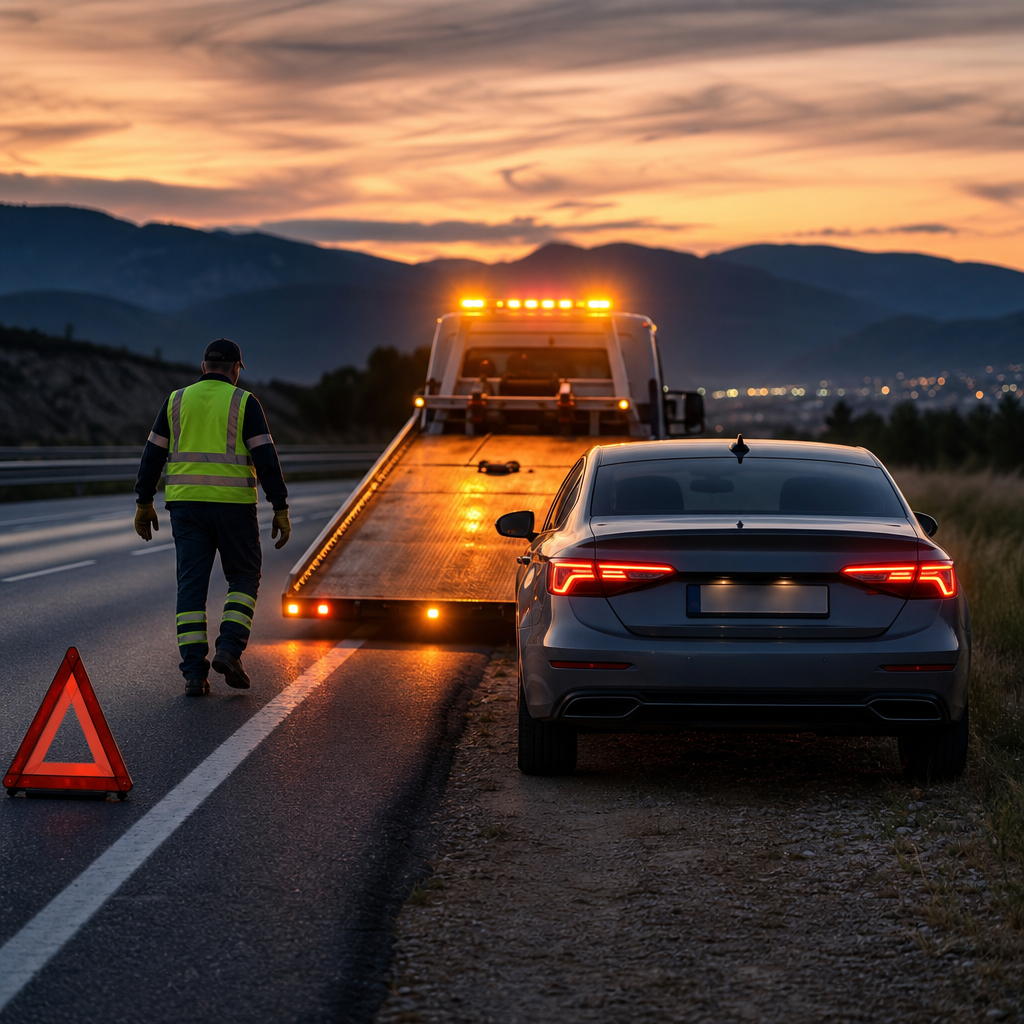
- Call for assistance when needed. A tow may be the safest option if your vehicle cannot be driven safely from its location. See emergency towing help or 24-hour towing service.
Why flooded roads are more dangerous than they look
Floodwater changes the road environment in ways that are difficult to see from inside a vehicle. Even water that appears shallow can conceal hazards, and darkness or continuing rain makes those hazards harder to assess.
You cannot reliably judge depth
Road markings, curbs, potholes, ditches, and the edge of the pavement disappear under muddy or reflective water. What looks like a shallow puddle may be a much deeper depression. Water can also collect unevenly, meaning one side of the lane may be significantly deeper than the other.
The road beneath the water may be damaged
Moving water can wash away soil near pavement edges, weaken shoulders, or shift debris into the roadway. Flooding may also hide an open drainage area, a missing section of pavement, or damage that was not visible before the storm. Driving through can leave a vehicle stuck, tilted, or unable to move safely.
Water can push a vehicle off course
Flowing water is not always obvious. A current crossing the road can reduce tire grip and pull a vehicle toward a lower area, shoulder, ditch, or canal-side drainage area. Large vehicles are not immune, and a passenger vehicle can lose control long before the driver realizes how strong the flow is.
Engine and electrical damage can follow
Floodwater can enter areas of the vehicle that are not designed to be submerged. If water reaches the engine intake, attempting to continue driving or restarting after a stall can cause serious damage. Electrical systems, brakes, steering components, interior materials, and wheel bearings may also be affected by water exposure.
Other drivers may make the scene less predictable
A flooded road can cause abrupt stops, unsafe turnarounds, stalled vehicles, and drivers trying to follow one another through water. Leave room, avoid crowding the edge of the flooded area, and do not assume another driver’s choice means the road is safe for your vehicle.
West Palm Beach rain: make the safer choice early
South Florida rain can be intense and localized. A route that was clear a few minutes ago may have standing water after a hard downpour. In West Palm Beach, pay particular attention to low-lying stretches, intersections with poor visibility, areas near drainage features, and roads where water is crossing from one side to the other.
If severe weather is expected, give yourself extra travel time and avoid shortcuts through unfamiliar streets. Staying on a route where you can turn around safely is often better than committing to a road that narrows, dips, or becomes obscured by water. If conditions are worsening, it is reasonable to pull into a safe, legal, dry location and wait rather than continue into uncertain conditions.
If your vehicle becomes stuck or stalls in floodwater
A stalled vehicle can create pressure to act quickly, but the priority is getting yourself out of danger—not getting the vehicle moving again.
- Do not repeatedly try to restart the engine. If water has reached critical components, restarting may worsen the damage.
- Assess personal safety first. If water is rising, moving, or entering the vehicle, leave the vehicle if you can do so safely and move toward higher ground.
- Do not stand or walk through moving floodwater. The ground may be uneven, covered by debris, or difficult to see.
- Move away from traffic when possible. Other drivers may have limited visibility and reduced braking ability in heavy rain.
- Share your location clearly when requesting help. Provide the road name, nearest cross street, direction of travel, visible landmarks, and whether the vehicle is in standing water or on dry pavement.
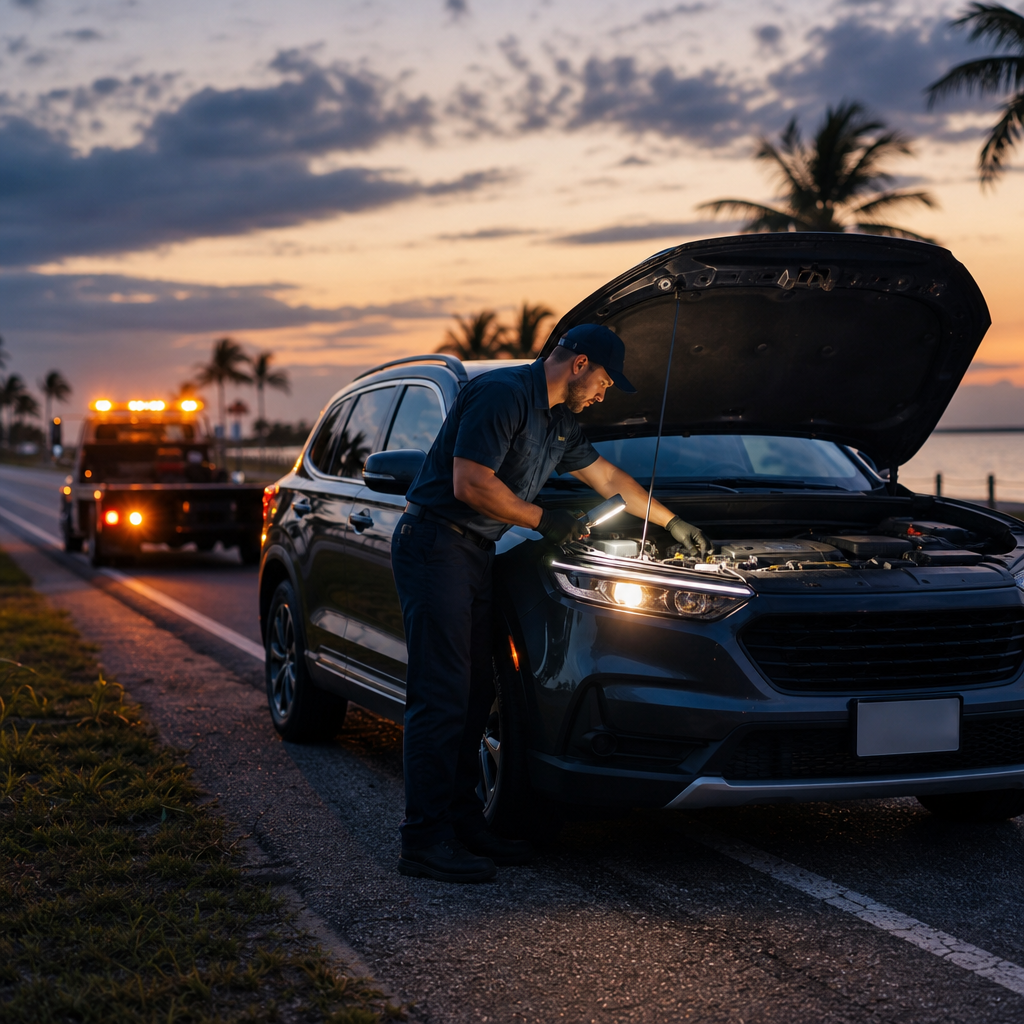
Once you are in a safe place, contact roadside assistance if the situation may be resolved without moving the vehicle far, or request a tow if the vehicle has stalled, cannot be safely driven, or needs to be moved from an unsafe location. For a vehicle that should be transported with its wheels off the ground, flatbed towing may be an appropriate option.
Flooded-road checklist for drivers
- Keep your phone charged when heavy rain is forecast.
- Check your route before leaving and allow time for a detour.
- Slow down well before standing water so you have room to stop safely.
- Watch for water that is rippling, flowing, or carrying leaves and debris across the road.
- Do not follow another vehicle into water just because it entered first.
- Do not drive around barricades or warning signs.
- Avoid stopping under trees, near unstable roadside areas, or in locations where water is accumulating.
- If your vehicle has been exposed to floodwater, avoid assuming it is safe to continue driving simply because the engine starts.
- When in doubt, turn around and call for help from a safe location.
When to call for towing or roadside assistance
Call for professional help when continuing to drive could put you, your passengers, or other road users at risk. You do not need to wait until a small problem becomes an emergency.
Call for a tow when:
- Your vehicle stalled after entering standing or moving water.
- The engine will not start, runs poorly, or warning lights appear after water exposure.
- The vehicle is stuck in mud, on a soft shoulder, or in a location where you cannot safely drive out.
- You are unsure whether brakes, steering, tires, or electrical systems were affected.
- Your vehicle is blocking a lane or is positioned where it cannot remain safely.
Call for roadside help when:
- You are safely stopped on dry ground but need assistance after a weather-related breakdown.
- You need help evaluating whether the vehicle can be moved safely from its current location.
- You need a safe next step after turning around or avoiding a flooded route.
For urgent situations where the vehicle is disabled or the road conditions are creating an immediate safety concern, use emergency towing assistance. If there is an immediate threat to life or you cannot reach safety, contact emergency services first.
Frequently asked questions
Can I drive through water if another car made it through?
No. The other vehicle may have different ground clearance, weight, traction, or a different path through the water. Conditions can also change quickly, and the pavement may be damaged or deeper than it appears. Turn around rather than using another driver’s decision as a safety test.
What should I do if my car stalls after driving into water?
Do not keep trying to restart it. Put personal safety first, leave the vehicle only if it is safe to do so, move to higher ground, and arrange assistance. A tow can help move the vehicle without requiring you to drive it farther.
Should I wait in my car near a flooded road?
Only remain in your vehicle if it is safely parked on dry, stable ground and conditions are not worsening. If water is rising around the vehicle, moving across the road, or creating a risk from traffic, move to a safer location if you can do so safely.
Is standing water dangerous even when it is not moving?
Yes. Standing water can hide potholes, washed-out pavement, debris, and depth changes. It can also affect vehicle components if it is deeper than expected. If you cannot clearly confirm the road is safe, do not enter.
What details should I provide when requesting a tow in heavy rain?
Give your exact location, nearest cross street or landmark, vehicle description, whether the vehicle is on dry pavement or in water, whether it is blocking traffic, and whether it starts or can roll. Clear information helps the towing provider understand the situation and plan the safest response.
The best flooded-road decision is made before your tires enter the water: stop, turn around, and get help if your vehicle cannot continue safely. My Florida Towing can help West Palm Beach drivers who need 24-hour towing or roadside assistance after severe weather creates an unsafe driving situation.