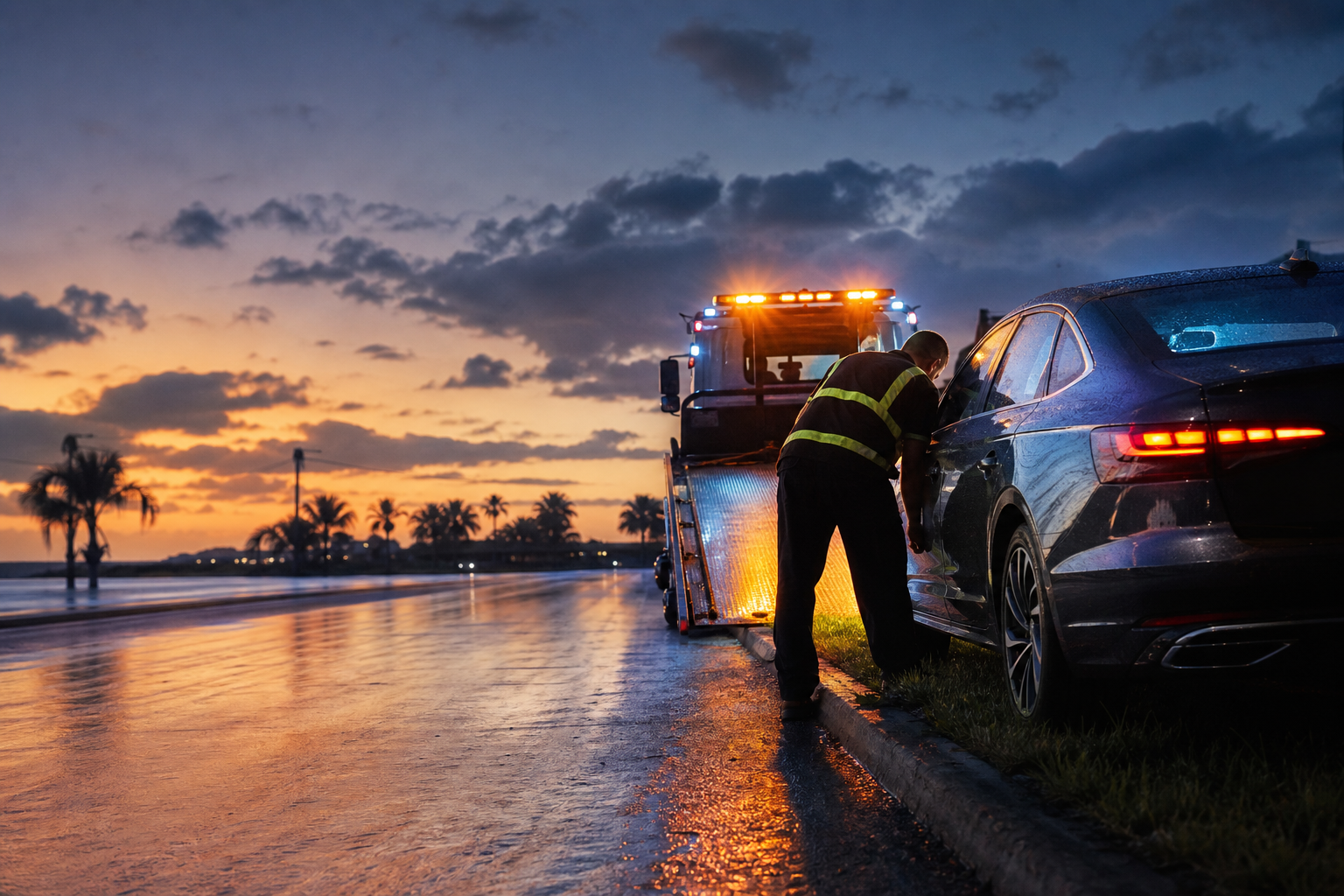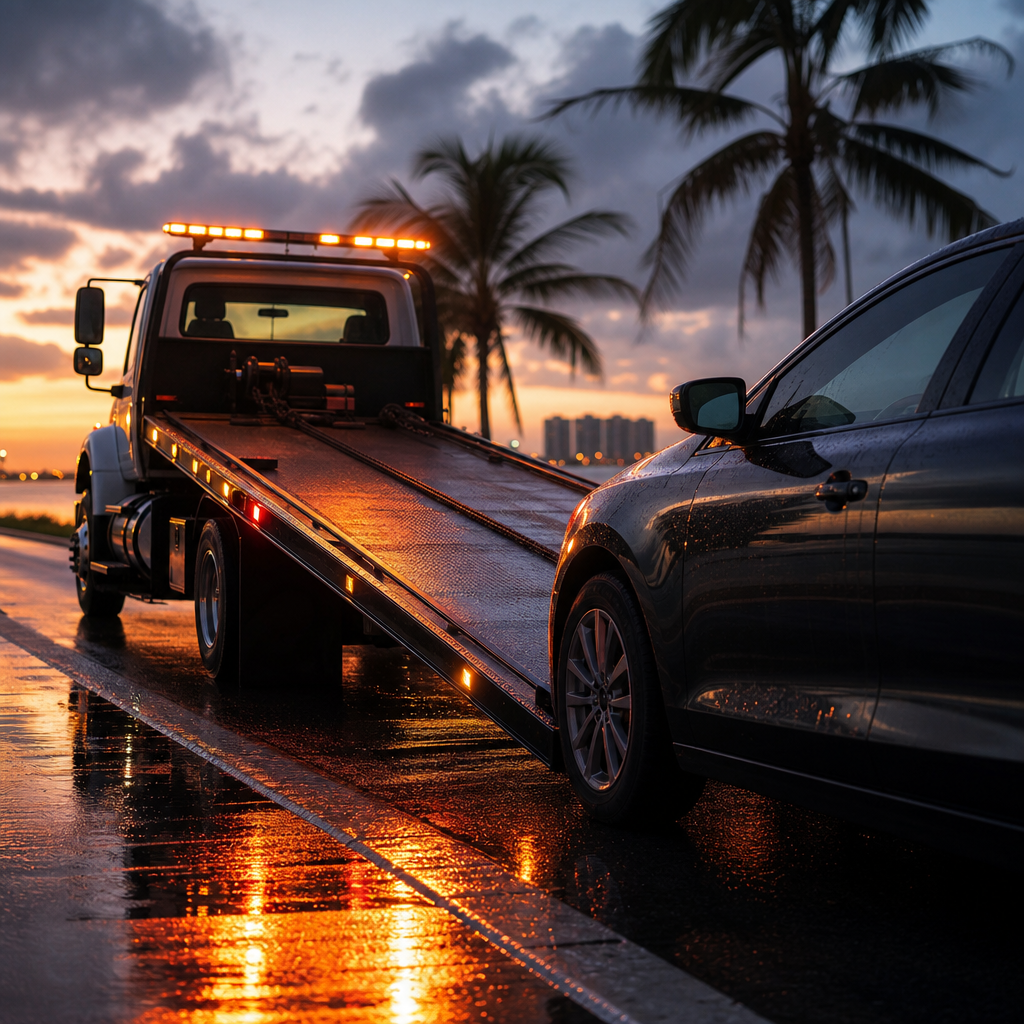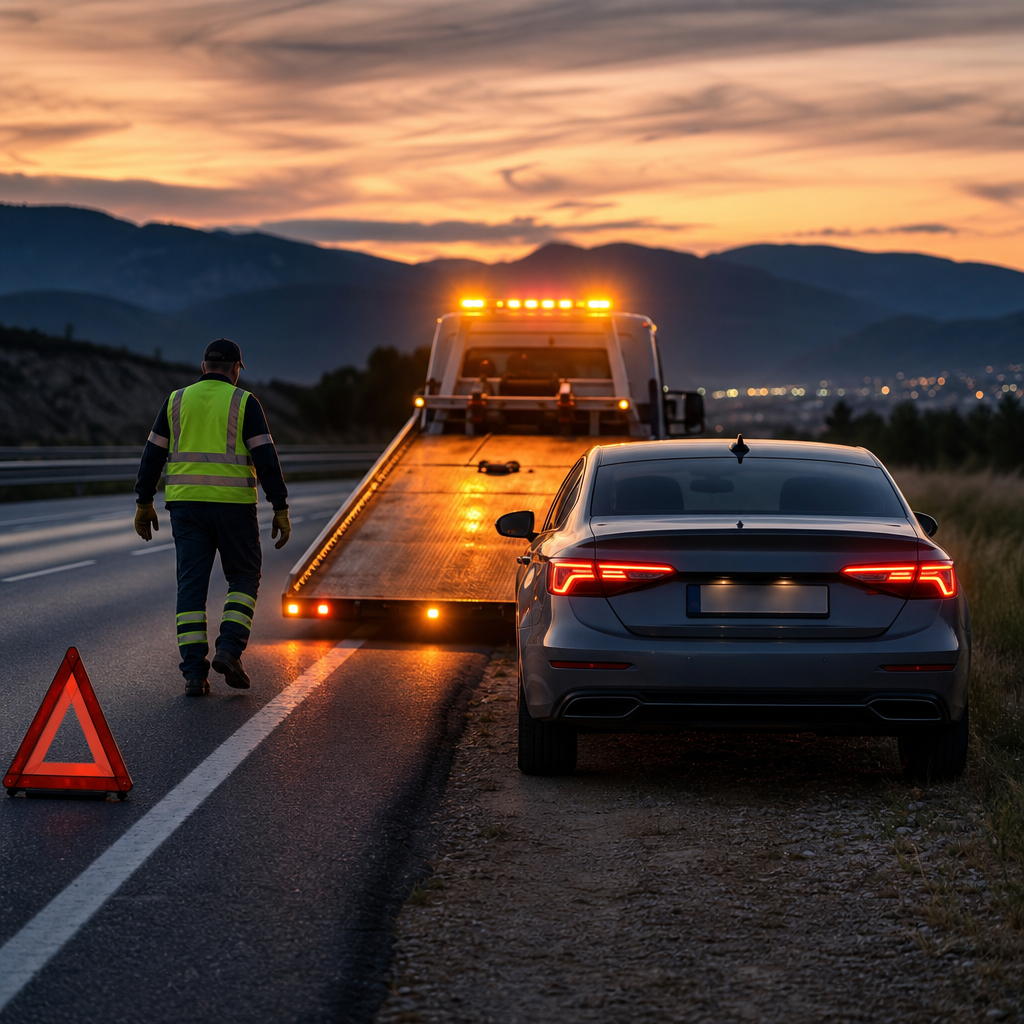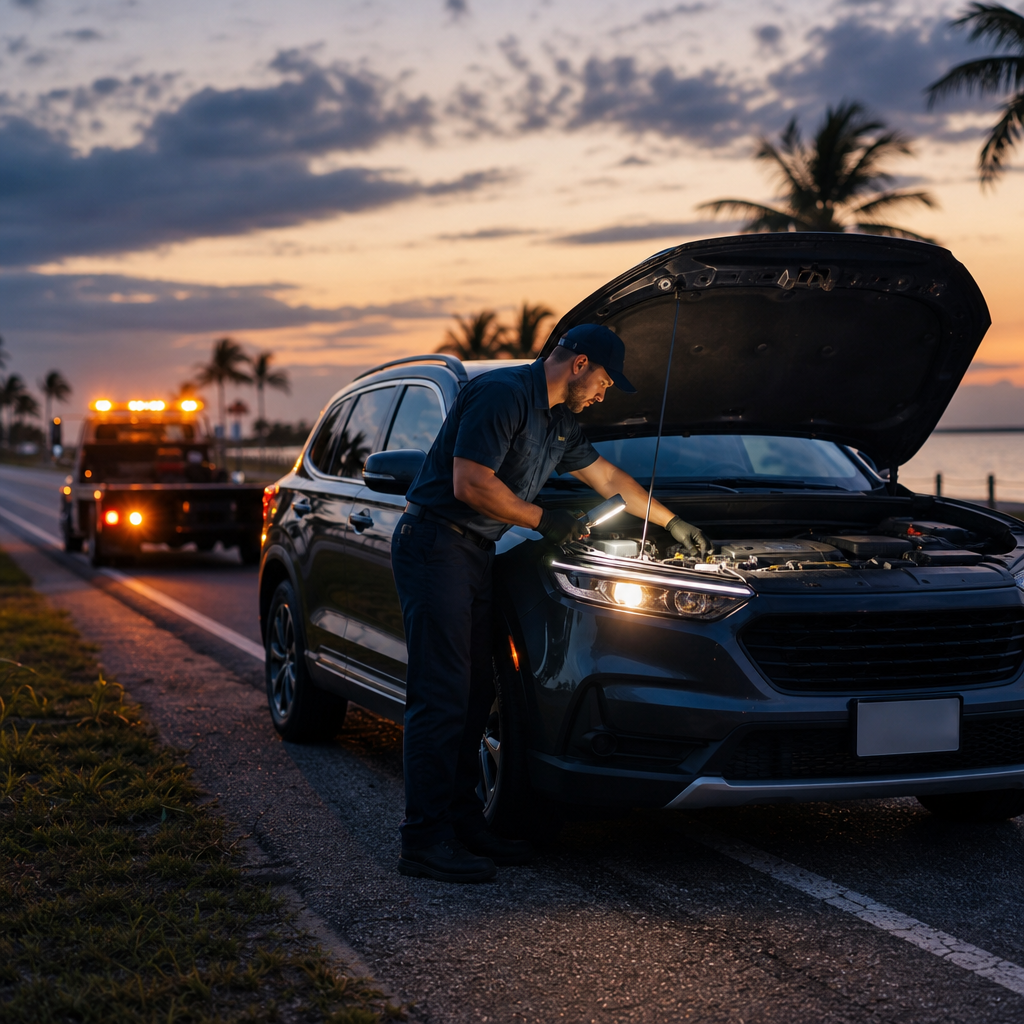
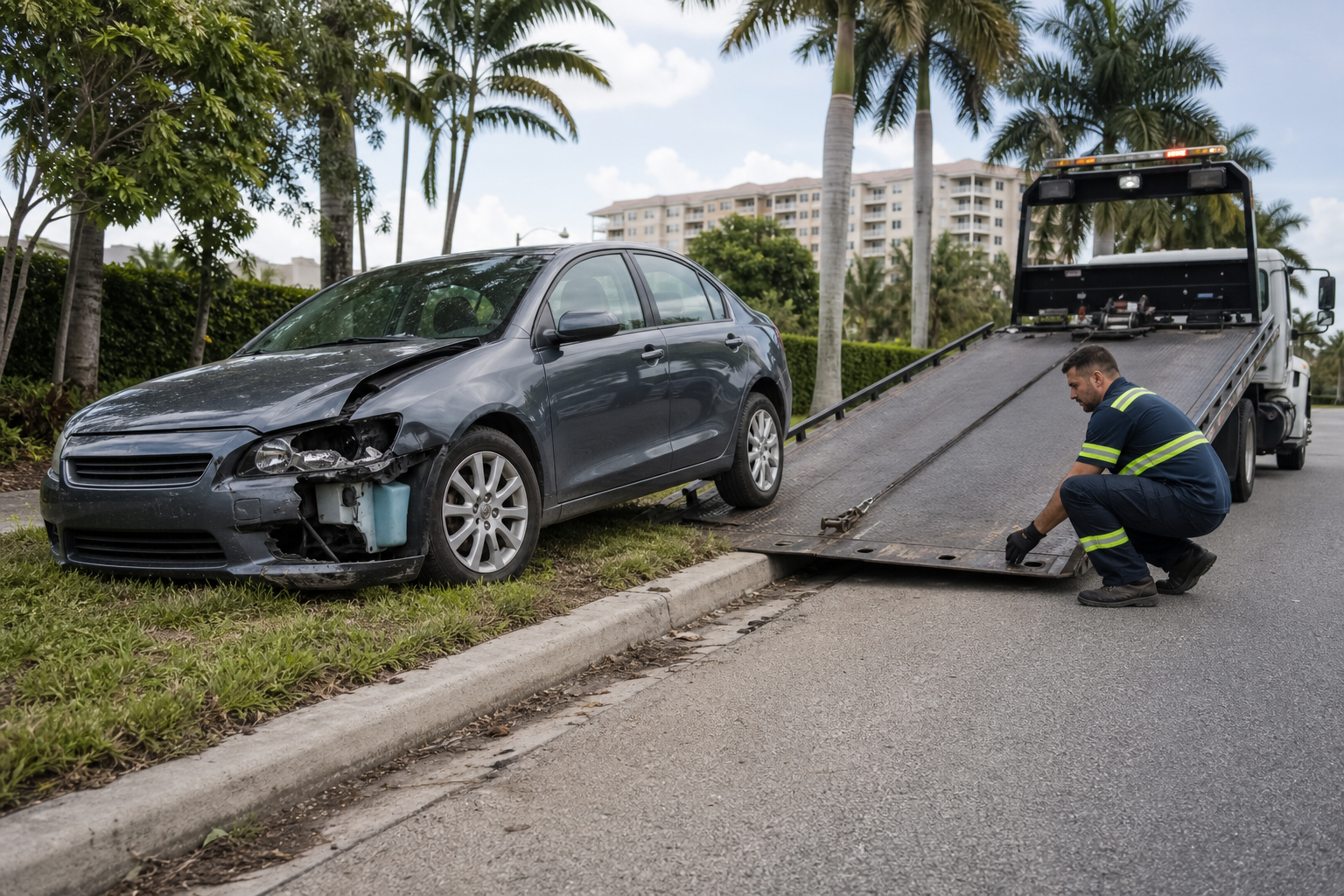
Do not drive after a collision unless the damage is clearly cosmetic, every tire and wheel is intact, visibility is unobstructed, no fluid is leaking, no warning appears, and the steering and brakes feel completely normal. If you cannot confirm all of those conditions from a safe position, leave the vehicle stopped and request towing. Collision damage can affect parts that are difficult to see, so uncertainty itself is a valid reason not to continue driving.
Before the problem: set up a collision transport plan
A few details stored in your phone can make a stressful call shorter. Keep your vehicle's year, make, model, color, and drivetrain information available. Know where the tow eye, key, and wheel-lock key are kept, but do not search through a vehicle while exposed to moving traffic.
Save a preferred destination where the vehicle may be accepted. After a collision, a tow operator needs a specific drop-off point rather than a general neighborhood. If you do not yet have a destination, say so during dispatch instead of guessing.
Enable location sharing on your phone and learn how to copy a map pin. In West Palm Beach, the dispatcher still needs confirmation that the pin matches the vehicle's actual position. A phone location can point to the wrong side of a property, a parallel access lane, or an entrance the truck cannot use.
At the roadside: choose move, stop, or tow
Make the decision in that order. First determine whether people face an immediate hazard. Next decide whether the vehicle can be moved only far enough to reach a safer nearby position. Finally, determine whether it should travel any farther under its own power.
Stop and call for help immediately when:
- Anyone may be injured or feels pain, dizziness, or disorientation.
- You see smoke, fire, sparking, or an unidentified leak.
- You smell fuel or hear hissing from the damaged area.
- The vehicle is in an exposed position and you cannot exit safely.
Emergency services should handle urgent threats. Once the scene is stable and transport is appropriate, a towing dispatcher can arrange vehicle recovery.
Do not drive; request a tow when:
- An airbag deployed or a seat belt no longer operates normally.
- The hood, bumper, underbody panel, exhaust component, or other part is loose or dragging.
- A tire is cut, losing air, pushed backward, or rubbing against the body.
- A wheel is tilted, the steering wheel is off-center, or the vehicle pulls sharply.
- The brake pedal feels soft, unusually hard, low, or inconsistent.
- The windshield is cracked in the driver's viewing area, a mirror is missing, or the lights needed for visibility are damaged.
- A warning light appears, the temperature rises, the engine runs roughly, or new grinding and scraping sounds begin.
- Fluid continues dripping or forms a puddle. Do not touch or taste an unknown fluid.
Wheel, steering, suspension, underbody, or substantial body damage often calls for flatbed towing because the vehicle can be carried without relying on damaged wheels to track behind the truck. Tell dispatch if a wheel will not roll or if the vehicle cannot be shifted normally.
Move only if every basic check passes
A short relocation may be reasonable only when nobody is injured, the damage appears cosmetic, all tires remain properly seated, nothing is leaking or hanging, the airbags did not deploy, visibility is clear, and the steering and brakes respond normally. This is not proof that the vehicle is safe for a longer trip. Stop at once if a warning, smell, vibration, pull, temperature change, or unusual sound appears.
When there is doubt, skip the driving test. Request 24-hour towing and describe the uncertainty to the dispatcher.
While waiting: make the pickup easy to find and access
Give the dispatcher location details in layers: confirm West Palm Beach and Palm Beach County, provide the exact address or map pin, identify the side or entrance where the vehicle is located, and describe whether it is in a travel lane, shoulder, parking area, driveway, gated property, or covered structure. Mention gates, low clearance, tight turns, soft ground, blocked access, or debris around the vehicle.
Then describe the vehicle and damage: year, make, model, color, which end was hit, whether airbags deployed, whether fluids are leaking, whether all wheels roll, whether steering is possible, and whether the key is available. Tell dispatch how many occupants are waiting and provide a callback number.
Remain away from moving traffic and the damaged side of the vehicle. Do not crawl underneath, pull off panels, stand between vehicles, or attempt to push a collision-damaged vehicle. If conditions change—such as smoke beginning, a tire collapsing, or your location becoming unsafe—contact emergency services as appropriate and update the towing dispatcher.
After service arrives: confirm the loading plan
Let the tow operator inspect the approach and choose the attachment points. Point out leaks, disabled steering, wheel damage, loose panels, deployed airbags, and anything that changed while you waited. Do not stand beside the cable, behind the vehicle, on the flatbed, or between the tow truck and the vehicle during loading.
Confirm the destination before transport begins. Remove essential personal items only when the operator says the vehicle is safe to access. Provide the correct key and any wheel-lock key, then verify how the operator can reach you if the destination cannot accept the vehicle.
Collision tow checklist
- Exact pickup location and usable entrance
- Year, make, model, color, and drivetrain if known
- Impact area and visible damage
- Airbag, leak, steering, brake, tire, and wheel condition
- Whether the vehicle rolls and shifts normally
- Key availability and confirmed destination
- Access restrictions or hazards around the vehicle
- Driver name and working callback number
Collision transport FAQs
Can I drive if only the bumper is damaged?
Only if the bumper damage is truly cosmetic and no part is loose, rubbing against a tire, blocking a light, or hiding a leak. Check from a safe position. If the bumper cover or reinforcement has shifted, towing is the safer choice.
Does a deployed airbag automatically mean I should tow the vehicle?
Yes. A deployed airbag signals a significant collision event and can obstruct driving. Other restraint, electrical, steering, or structural damage may also be present even when the vehicle starts.
Should I drive if the car starts and no warning lights appear?
Starting does not confirm that the steering, brakes, wheels, cooling components, or structure are safe. Use the full damage checklist. Any leak, rubbing, pulling, unusual pedal feel, restricted visibility, or loose component means the vehicle should be towed.
What if I cannot describe my location in West Palm Beach?
Share a map pin, then verify what is physically around the vehicle and which entrance reaches it. Tell dispatch whether you are on a public roadside or within a property, and identify any gate, clearance, surface, or access limitation. Stay on the phone if the dispatcher needs to clarify the truck's approach.
Can roadside assistance make a collision-damaged vehicle safe to drive?
Roadside assistance may evaluate a limited roadside issue, but it cannot establish that hidden collision damage is safe. When the impact affected a wheel, tire, steering, brakes, airbags, body structure, visibility, or fluid-containing component, transport is the appropriate next step.
Safety-first call to action: If you cannot confidently clear every driveability check, do not take a chance in West Palm Beach traffic. Move away from immediate hazards, gather the dispatch details above, and call for towing rather than driving a vehicle with uncertain collision damage.