Stalled Car in Traffic: How to Get Help Safely
A stalled vehicle in a live lane is an immediate traffic hazard. Turn on hazards, stay belted if leaving is unsafe, and call 911.
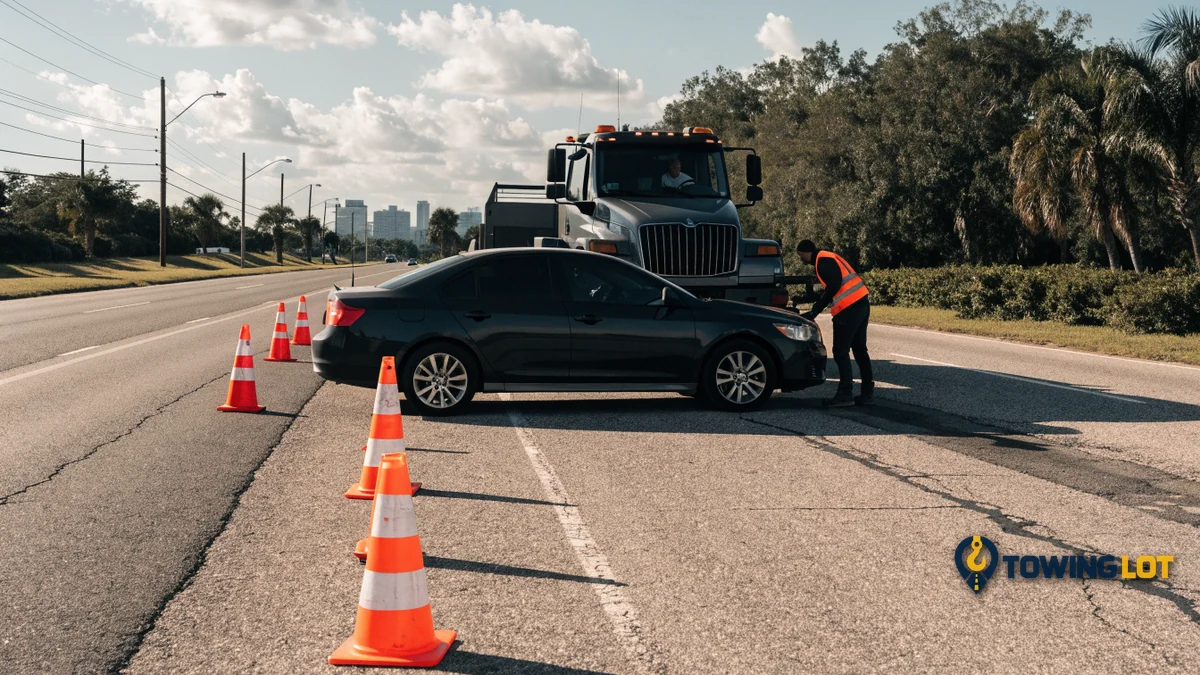
A stalled vehicle in a live lane is an immediate traffic hazard. Turn on hazards, stay belted if leaving is unsafe, and call 911.
What to do right now
- Tell dispatchers the exact lane and direction
- do not push across traffic
- exit only toward a safe area when conditions allow.
Use the right equipment and method
Law enforcement or road service may protect the lane before a tow truck connects. Fast scene clearance still requires safe rated attachment points.
What to tell the dispatcher
- Road and direction
- lane
- nearest intersection or marker
- vehicle color
- occupants
- hazards.
A clear description helps the provider choose suitable equipment before leaving and reduces avoidable delays at the pickup point.
What can change the price
- Traffic control
- recovery position
- tow distance
- and required truck.
Ask for an itemized estimate, included mileage, accepted payment methods, and any condition that could change the quote. The listed provider sets the price and arrival time.
Frequently asked questions
Stalled Car in Traffic: How to Get Help Safely
A stalled vehicle in a live lane is an immediate traffic hazard. Turn on hazards, stay belted if leaving is unsafe, and call 911.
What information should I give the towing company?
Road and direction; lane; nearest intersection or marker; vehicle color; occupants; hazards. Also explain any safety hazard or access restriction before the truck is dispatched.
What should I confirm before authorizing service?
Confirm the company name, truck or service type, destination, estimated arrival window, itemized price, mileage, payment method, and possible extra charges.
Find the right help
Compare stalled car in traffic providers and call directly to confirm current coverage. You can also find towing near you or read Parking Garage Towing: Low-Clearance Recovery Options.