Use this decision rule first: if the vehicle is exposed to moving traffic, fire, fuel, rising water, or another immediate threat, protect people before trying to make the car easier to tow. If the vehicle is stable and safely out of traffic, stay visible, limit roadside movement, and prepare a precise location for the towing provider.
A realistic West Palm Beach nighttime breakdown
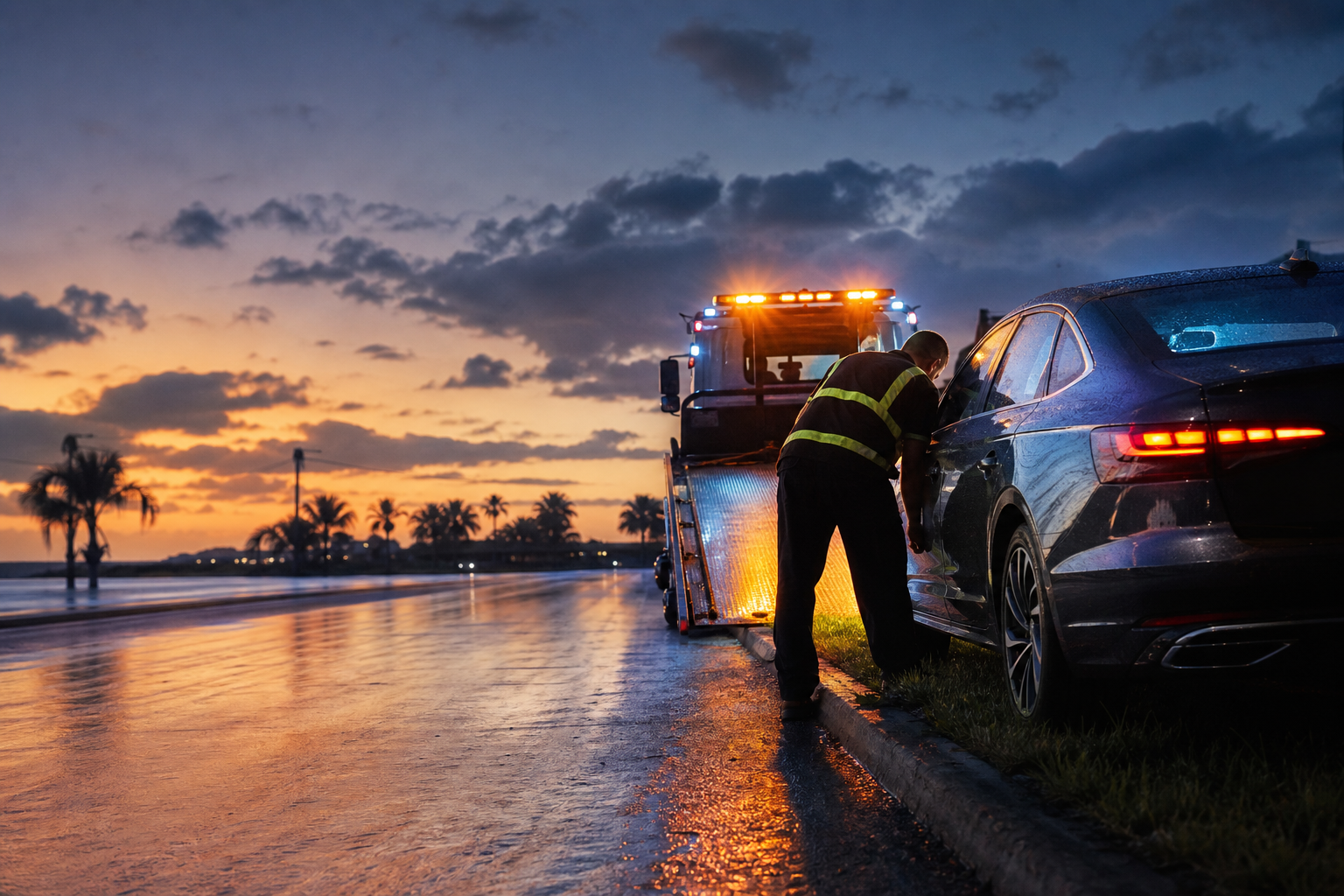
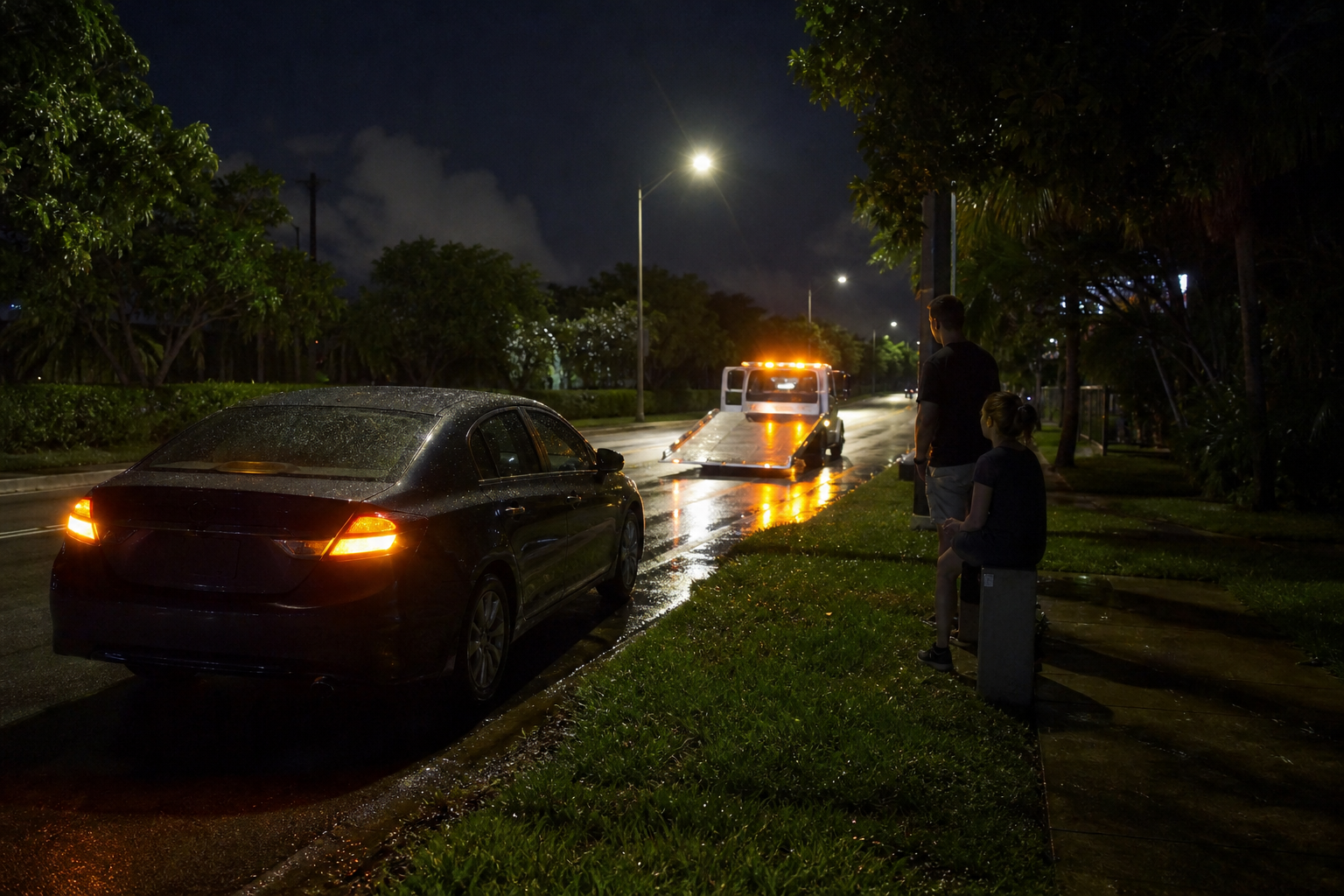
Your vehicle loses power after dark and comes to a stop near the edge of a road in West Palm Beach. The shoulder or stopping area is difficult to judge, passing headlights create glare, and a short Florida rain shower has made the pavement reflective. Your phone identifies the general area, but the tow operator still needs to know which side of the road you are on and how to reach the vehicle.
This is not the time to inspect the vehicle beside traffic or walk around searching for a street number. Your first tasks are to evaluate immediate danger, improve visibility without increasing your exposure, and create a location description a driver can use on the first approach.
Immediate response: protect people, then mark the vehicle
Do: assess the stopping position from inside first
Turn on the hazard flashers if the electrical system still works. Look through the windows and mirrors before opening a door. Determine whether the vehicle is fully outside the travel path, partly exposed, on unstable ground, or near standing water.
Remaining inside with seat belts fastened may be the safer choice when the vehicle is stable and well outside moving traffic. It is not a universal rule. Leave for a protected area if there is smoke, fire, a fuel smell, encroaching water, dangerous heat inside the cabin, or another condition that makes staying riskier. Exit only from the side offering the least exposure, if that can be done safely.
Do: use light without creating glare or draining the battery
- Keep hazard flashers operating when available.
- Use the interior light briefly to locate a phone, vest, or essential item, then switch it off. A bright cabin can reduce your ability to see approaching traffic and may consume a weak battery.
- If using a phone flashlight, aim it downward while walking. Do not shine it toward drivers.
- Wear a reflective or high-visibility garment if one is already reachable inside the cabin. Do not enter an exposed trunk or cargo area solely to retrieve it.
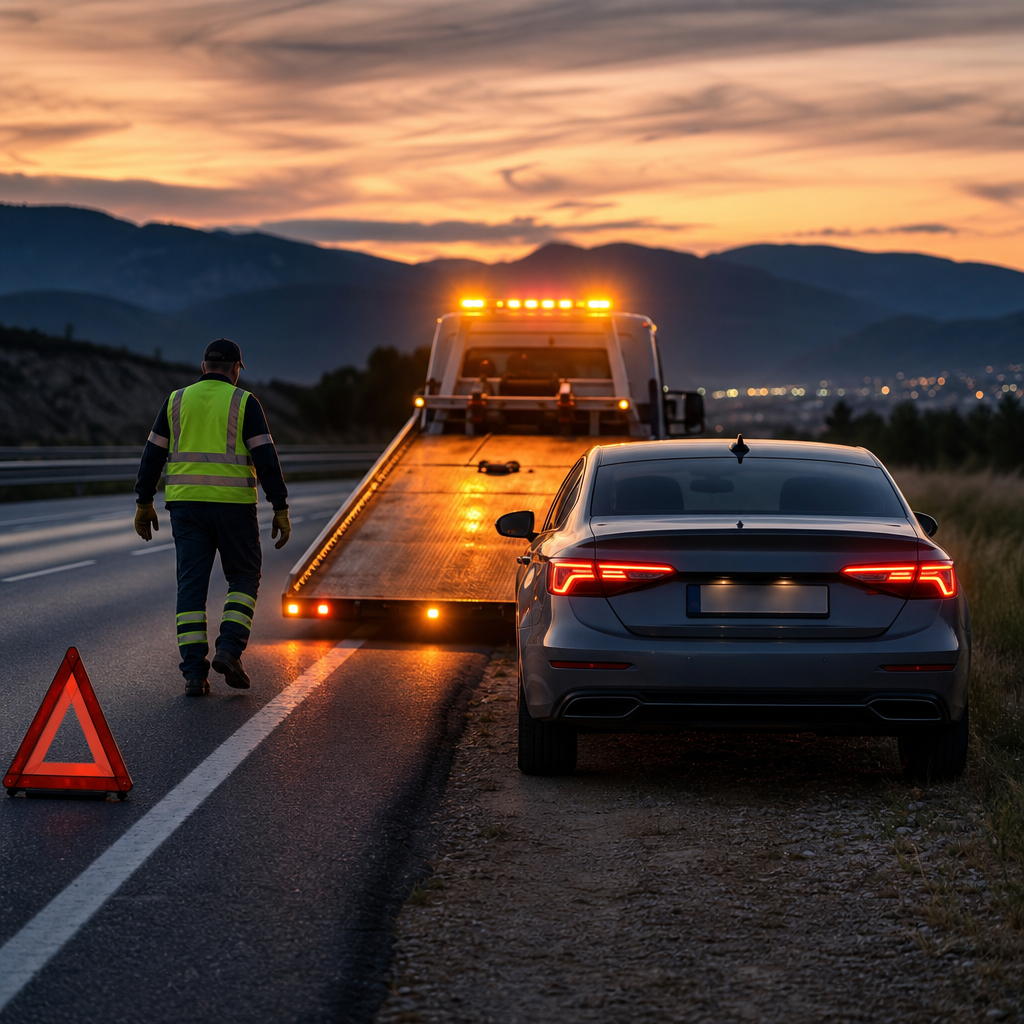
- Place reflective warning equipment only when you can do so without walking alongside active traffic. Poor weather or a narrow stopping area may make deployment more dangerous than leaving it stored.
Don’t: wait directly in front of or behind the car
A disabled vehicle can be pushed or displaced if another vehicle hits it. Drivers may also fixate on its lights and drift toward it. Do not stand at either bumper, lean into the engine compartment, or gather between the vehicle and moving traffic. If you move to a protected location, stay well away from the likely path of the disabled vehicle.
South Florida rain can sharply reduce contrast at night. Wet pavement reflects headlights and can make a stopped car appear farther away than it is. Avoid stepping into water whose depth or surface cannot be seen, and do not use an umbrella if it blocks your view of traffic or makes movement harder.
Turn a phone pin into a usable West Palm Beach location
A map pin is useful, but it should not be the entire location report. GPS can place a pin on the wrong side of a divided roadway, behind a building, or at an entrance the tow truck cannot use.
Send the pin, then add these details:
- Confirm that you are in West Palm Beach, Palm Beach County, Florida.
- Provide the nearest visible street name or verified address shown on a sign or your map.
- State your direction of travel before the vehicle stopped.
- Describe the exact position: shoulder, roadside parking space, driveway, surface lot, garage, or gated property.
- Identify which side of the road the vehicle occupies.
- Give one observable feature near the vehicle, such as an entrance number, building number, gate, or lot section. Read it directly rather than guessing.
- Report the vehicle’s color, body style, and hazard-light status.
If the phone’s location and the visible signs disagree, tell the dispatcher. Do not walk into a dark or exposed area merely to improve the pin. A screenshot of the map can help preserve the location if data service becomes unreliable, but the written access description is still needed.
Access details that can change the tow approach
Tell the provider before dispatch if the vehicle is behind a gate, inside a parking structure, under a low overhead area, blocked by a curb, or positioned where a tow truck cannot pull directly in front of it. For a garage, read the posted clearance only if it is visible from a safe location. Do not estimate it.
Arrange gate access early. Provide an entry code only through the towing provider’s requested communication method, or identify the person who can open the entrance. If property staff direct vehicles through a particular entrance, relay those instructions exactly. These details help the provider decide whether standard towing access is possible or whether different equipment and staging are needed.
Choose the right type of help
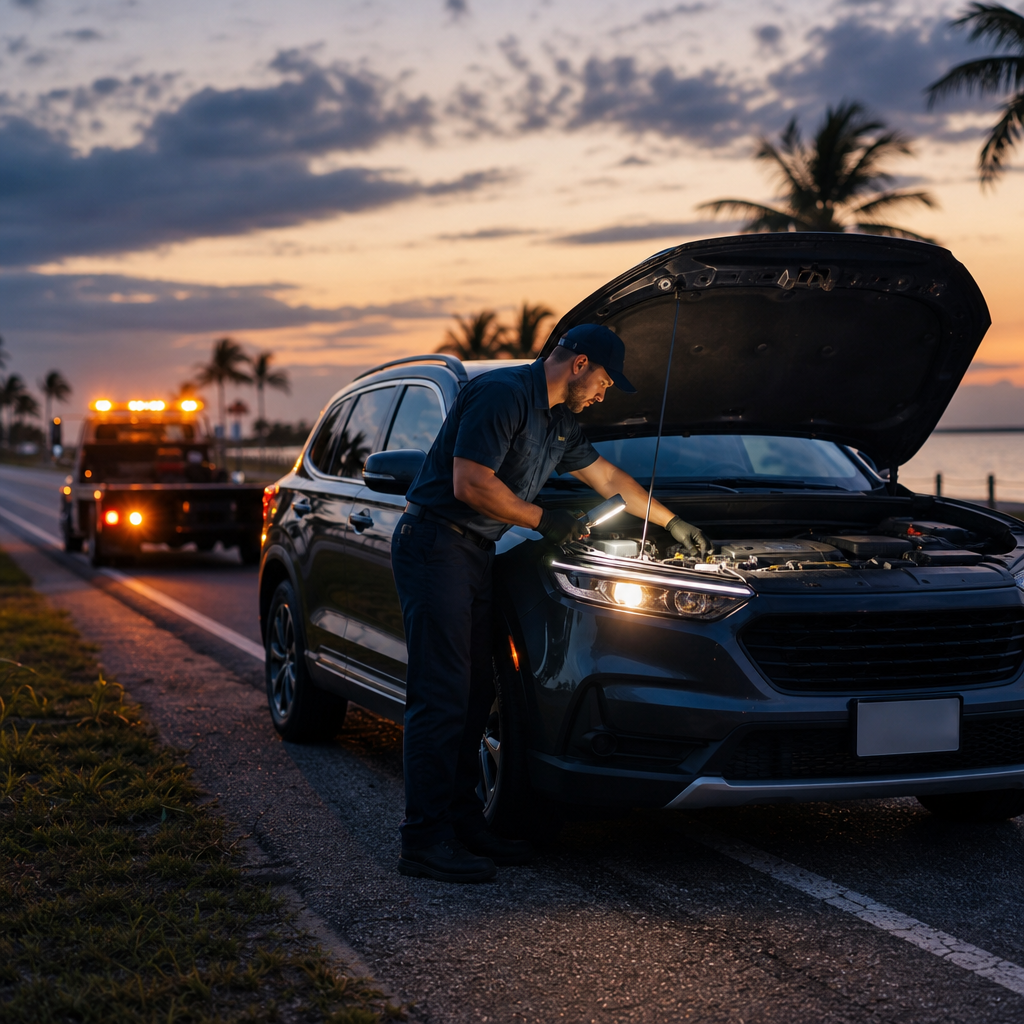
Request roadside assistance when the vehicle is safely accessible and the likely need is a limited on-site service, such as a battery jump, tire change using a usable spare, or vehicle entry. Tell the provider about traffic exposure, soft ground, rain, and restricted access; a service that is simple in a parking space may not be safe at an exposed roadside position.
Request 24-hour towing when the vehicle cannot be made roadworthy on site, cannot be reached safely for roadside service, or needs transportation to another location. Do not repeatedly attempt to drive a vehicle that will not steer, roll, or remain running normally. Let dispatch know if the wheels are turned against a curb, the vehicle is in gear and will not shift, or any wheel appears damaged.
Flatbed towing may be appropriate when loading the entire vehicle onto a carrier is preferable, but the final equipment choice depends on the vehicle, its condition, and available access. Give accurate facts rather than requesting equipment based only on appearance.
Call emergency services before a towing company when there is fire, visible smoke, a suspected fuel leak, a medical emergency, rising water, or an immediate threat from the vehicle’s position. Towing dispatch cannot control an active life-safety hazard.
Make the service handoff information-ready
Have this checklist ready before calling, provided gathering it does not delay leaving danger:
- Your name and callback number
- West Palm Beach location pin plus visible street or address information
- Direction of travel and side of the road
- Vehicle color, body style, and identifying details
- What happened and whether the vehicle can roll, steer, or shift
- Any smoke, leaking fluid, damaged wheel, standing water, or traffic exposure
- Gate, garage, clearance, entrance, or property-access restrictions
- Requested destination, if towing is needed
Stay reachable after the request. Keep enough phone power for calls and messages, and answer location questions directly. If you move to a safer waiting place, tell dispatch where you are in relation to the vehicle. Before approaching an arriving truck, confirm it matches the provider information you received and wait for the operator to tell you where to stand.
Ready to request help? Call with the location pin, direction of travel, vehicle description, safety conditions, access restrictions, and whether you need roadside service or a tow. That information gives dispatch a clearer picture before a truck is assigned.
Nighttime breakdown FAQs
Should I stay inside my vehicle while waiting?
Only when the vehicle is stable, away from moving traffic, and free from fire, fuel, water, or dangerous cabin heat. Keep the seat belt fastened if you stay inside. If leaving is safer, exit from the least-exposed side and move to a protected place away from the vehicle’s front and rear.
Should I leave the interior light on so the tow operator can see me?
Usually, hazards and an accurate vehicle description are more useful. Continuous interior lighting can reduce your night vision and drain a weak battery. Use it briefly when needed, then turn it off unless the dispatcher or operator asks otherwise.
What if my map pin appears correct but the driver cannot find me?
Confirm the city, visible street or address, direction of travel, side of the road, and nearest usable entrance. Explain whether barriers, gates, medians, or a parking structure prevent a direct approach. Update dispatch rather than walking into traffic to meet the truck.
Can roadside assistance help if the car is close to moving traffic?
Possibly, but safety and workspace determine whether on-site service is practical. Describe exactly how much of the vehicle is exposed and whether the service side faces traffic. The provider may recommend towing instead of performing roadside work in an unsafe position.