An engine that will not start can turn an ordinary stop into a stressful situation quickly. Whether your vehicle is parked at home, outside a store, in a garage, or on a busy West Palm Beach roadway, the priority is to protect yourself, avoid making the problem worse, and get the right kind of help.
Some no-start situations can be resolved with roadside assistance, such as a weak battery or a simple connection issue. Others need a tow because repeated starting attempts may not help, the vehicle is in an unsafe location, or there are signs of a more serious problem. This guide helps you make that decision without guessing.
Start by Noticing What the Vehicle Does
The sound and behavior of a vehicle when you try to start it can help determine whether roadside assistance may be appropriate. You do not need to diagnose the vehicle; simply describe what you observe when requesting help.
The engine does not crank
If you turn the key or press the start button and the engine does not turn over, you may hear nothing at all, a single click, or repeated clicking. This can happen when the battery has insufficient power, the battery connections are not secure, or another starting-system issue is present.
If the dash lights are dim, flicker, or do not come on normally, a low battery is possible. A roadside technician may be able to assess whether a jump-start is appropriate. However, a successful jump-start does not guarantee the vehicle will remain running or restart after it is shut off, so be prepared for towing if it stalls or if the underlying issue is unclear.
The engine cranks but will not start
If the engine turns over normally but does not begin running, the issue may not be a simple battery problem. Continuing to crank the engine can drain the battery and may not improve the situation. This is often a good time to arrange assistance rather than trying repeated starts.
Tell the dispatcher that the vehicle cranks but will not start. That detail helps distinguish a likely no-crank condition from a condition that may require a tow to a repair location.
The vehicle starts briefly, then shuts off
A vehicle that starts and immediately stalls is not dependable to drive, especially if you need to merge into traffic or travel on faster roads. Request roadside assistance or towing instead of attempting to drive it through West Palm Beach traffic. If it will not stay running consistently, a flatbed may be the safest transport option.
The key, fob, or start button is not responding
Before requesting help, make sure the transmission is fully in park. If your vehicle has a conventional key, avoid forcing it in the ignition. If it uses a push-button start, try holding the brake firmly and following the starting procedure shown in the owner’s manual. If the vehicle still will not respond, roadside assistance can help you decide whether the issue can be handled on site or needs towing.
Safety Comes Before Troubleshooting
A no-start vehicle is more urgent when its location creates a risk. In West Palm Beach, traffic can move quickly around major routes such as I-95, the Florida Turnpike, Okeechobee Boulevard, Southern Boulevard, and US-1. If your vehicle is disabled near moving traffic, do not try to diagnose it from an exposed lane or shoulder.
If possible, remain inside with doors locked and seat belts fastened while you arrange help, particularly when traffic is nearby. If staying in the vehicle is not safe, move well away from traffic only when you can do so safely. In an immediate danger situation, contact emergency services first.
Do not attempt a jump-start if you see smoke, damaged or leaking battery components, exposed wiring, or you smell strong fuel vapors. Keep flames, sparks, and cigarettes away from the vehicle. Those are towing situations, not do-it-yourself situations.
A Practical No-Start Checklist
- Confirm the basics: Vehicle is in park; parking brake is set; brake pedal is pressed if required for starting.
- Look at the instrument panel: Note whether lights appear normal, dim, flickering, or absent.
- Listen once: No sound, a click, repeated clicks, normal cranking, or cranking followed by no start are all useful details.
- Check the fuel gauge: If the gauge is readable, confirm there is fuel. Do not rely on repeated attempts to solve a no-start problem.
- Use only the instructions you know: Follow the owner’s manual for a key fob, steering lock, or push-button start procedure. Do not force parts or dismantle components.
- Look for warning signs: Smoke, unusual odors, leaks, damaged wiring, or a battery that looks swollen or damaged mean you should stop troubleshooting.
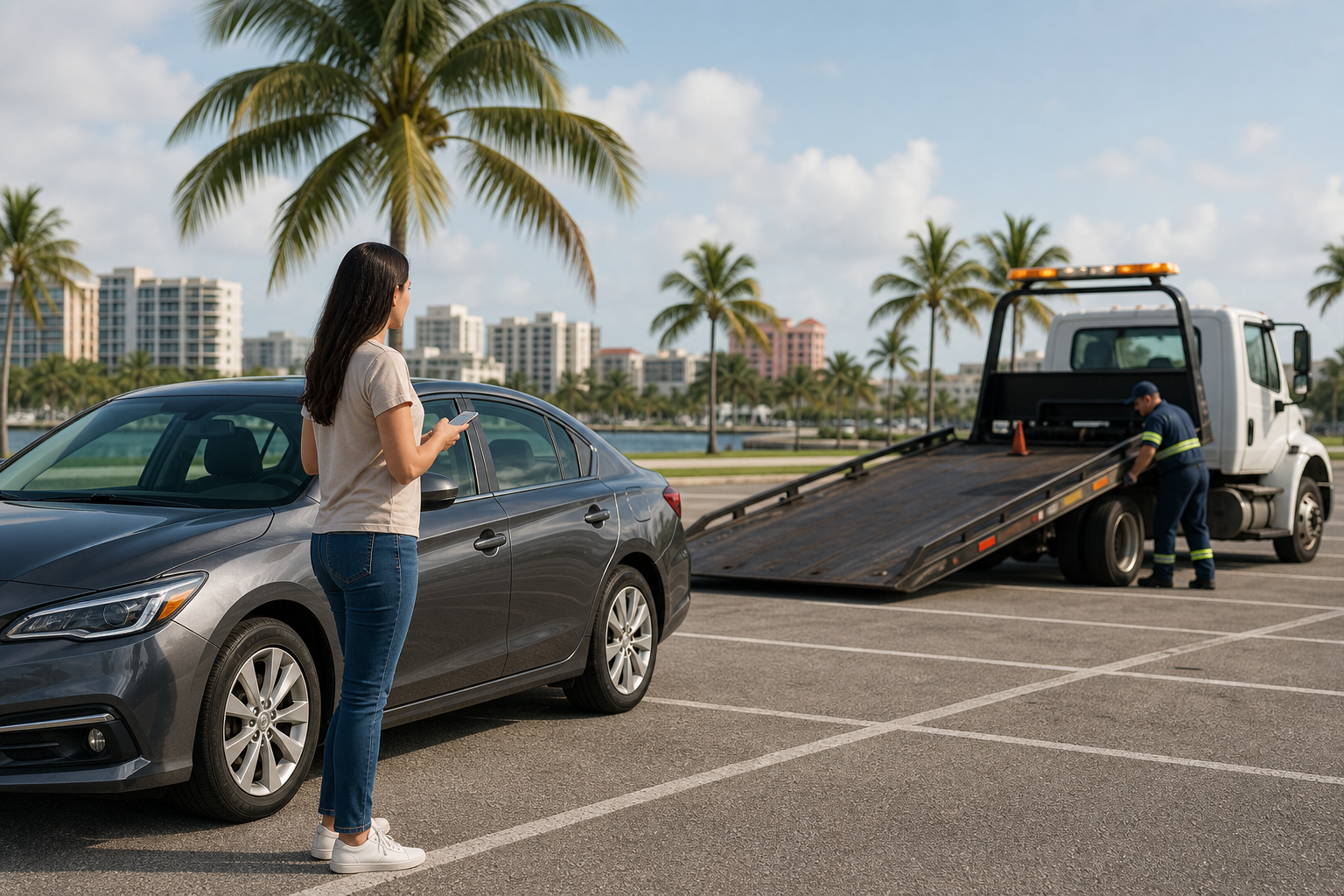
- Know your location: Share the nearest address, cross street, parking-lot name, or a safe landmark. On a major road, provide your direction of travel if known.
- Keep your phone available: Have your vehicle make, model, color, and the starting symptom ready when contacting assistance.
When Roadside Assistance May Be Enough
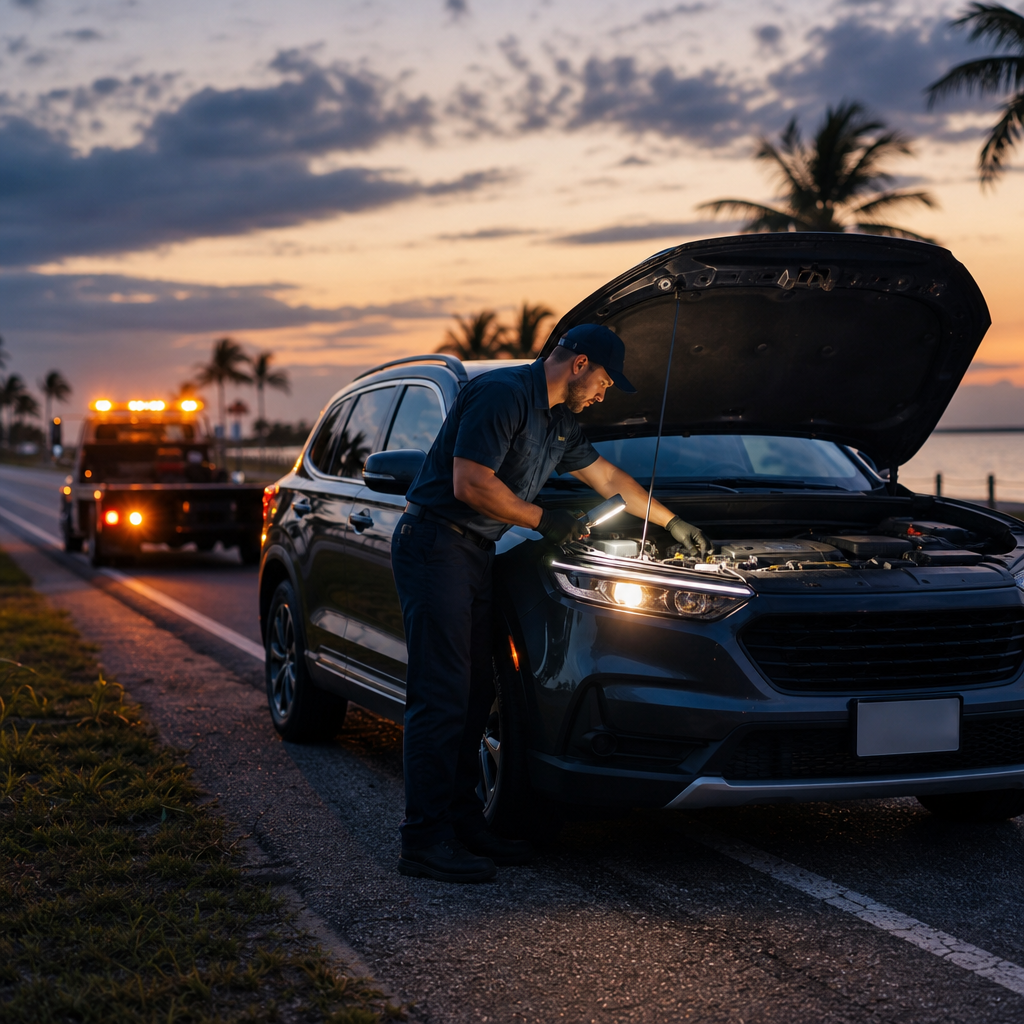
Roadside assistance can be a reasonable first request when the vehicle is safely parked and the symptoms point to a potentially simple starting issue. For example, a vehicle with dim lights and clicking may benefit from an on-site battery assessment or jump-start attempt. A technician can also help determine whether the vehicle starts reliably after service.
Request roadside assistance when the vehicle is in a safe, accessible location and you want professional help evaluating a no-start condition before arranging transport. Be clear that the engine will not start and explain whether it clicks, cranks, or stays completely silent.
If assistance gets the vehicle started, avoid assuming the problem is permanently resolved. If warning lights remain on, the engine runs unevenly, it stalls, or you do not feel confident driving it, ask about towing rather than risking another breakdown away from your current location.
When to Request a Tow Instead
Choose towing when a safe on-site solution is unlikely or when driving the vehicle would create additional risk. A tow is often the better choice in the following situations:
- The engine cranks but will not start after a limited attempt.
- The vehicle starts but stalls, runs poorly, or will not remain running.
- There is smoke, a burning odor, a fuel smell, visible leakage, or apparent battery damage.
- The vehicle is stopped in a hazardous location or cannot safely remain where it is.
- A jump-start has already been attempted and did not work, or the vehicle will not restart afterward.
- You do not know why it failed to start and do not want to risk being stranded again.
- The vehicle needs to be transported without being driven.
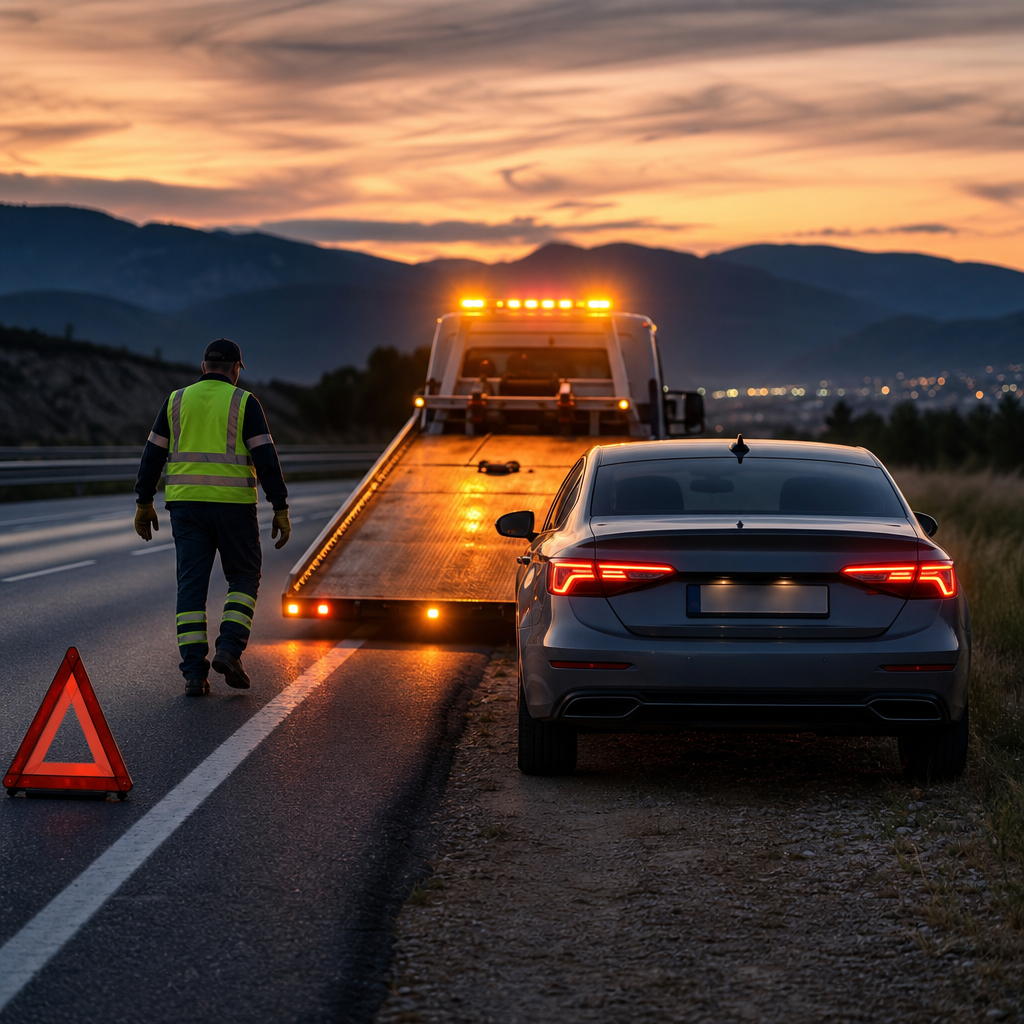
For a vehicle that cannot be started or safely driven, 24-hour towing provides a direct path to getting it moved from your location. If the no-start situation feels urgent because of where you are or the conditions around you, use emergency towing. A flatbed towing option may be appropriate when you prefer the vehicle to be carried rather than driven or pulled during transport.
What to Tell the Dispatcher
Clear information helps the towing or roadside provider arrive prepared. You do not need technical terminology. A simple description is enough:
- Your exact location, including the nearest cross street, business name, or roadway direction.
- Your vehicle’s make, model, color, and approximate size.
- Whether it is in a parking space, driveway, garage, shoulder, or traffic lane.
- Whether the engine clicks, cranks, starts and stalls, or does nothing.
- Whether hazards work and whether there are smoke, leaks, warning lights, or unusual smells.
- Where you want the vehicle taken if towing is needed.
Also mention access concerns, such as a low-clearance garage, a gated community, or a vehicle positioned where the provider will need to approach from a particular side.
Frequently Asked Questions
Should I keep trying to start my car if it will not start?
No. Limit yourself to a brief attempt or two to identify what the vehicle is doing. Repeated cranking can drain the battery and does not usually resolve a no-start condition. Request assistance if it does not start normally.
Can roadside assistance help if the engine only clicks?
Yes. Clicking, especially with dim dashboard lights, can be consistent with a low battery. A roadside technician can assess the situation and determine whether a jump-start attempt is appropriate. If the vehicle still will not start or cannot remain running, towing may be needed.
What if my car will not start on I-95 or another busy road?
Focus on personal safety first. Turn on hazard lights if possible, avoid working on the vehicle near traffic, and request help. If the situation presents immediate danger, contact emergency services first.
Do I need a tow if my vehicle starts after a jump?
Not always, but do not assume the issue is solved. If the vehicle stalls, warning lights remain on, it starts inconsistently, or you are not comfortable driving it, arrange towing rather than taking chances.
Should I choose flatbed towing for a no-start vehicle?
A flatbed is a useful option when the vehicle cannot be driven, you want it carried during transport, or the provider recommends it based on the vehicle’s condition and location.
A no-start problem does not require you to become a mechanic on the roadside. Notice the symptoms, protect your location, avoid repeated attempts, and request the level of help that matches the situation. For a safely parked vehicle with a possible battery-related issue, roadside assistance may help. For an unsafe location, recurring no-start condition, or warning signs such as smoke or fuel odor, towing is the safer next step.